

Religious Education
Welcome
Mr Cristo Rodrigues in a review of RE at Broadway (March 2026) wrote.
‘Broadway is a one-of-a-kind school. It is unique in its locality and demographics, but it is even more unique in how these factors become strengths. The contact between Christians and Muslims and Jewish leaders is done in a spirit of love and mutual respect. Values are lived not laminated. These strengths do not come, however, from a minimisation of religious education, religious identity and religious differences. Too many schools promote social cohesion in a superficial way with an emphasis on only the similarities for example between the Abrahamic faiths. Not so at Broadway. talented and committed Muslims teach both Christianity and Islam with Christian teachers teaching both, also, doing so with respect, accuracy and passion for education and a love for the children in their care. RE is not a subject that is used as leverage for social cohesion, as is the case of instrumentalist versions of the subject. Lessons contain strong substantive content.
Students are able to have their respective religious identities and learn, in real ways, to live alongside each other. Students learn about each other’s respective faiths with tolerance and respect towards them and reflecting on their own growth in empathy yet maintaining integrity in their differences’.
Please listen to how the Religious Education department have put their curriculum together and how it is delivered to students
Introduction
It is our intent for the Religious Education element of our school curriculum to engage, inspire, challenge, and encourage pupils, equipping them with the knowledge and skills to answer challenging questions and enables pupils to ask deep and often searching questions about their own faiths and beliefs, and the beliefs, faiths and opinions of others regarding contemporary moral issues.
The teaching of Religious Education at Broadway Academy makes links between the beliefs, practices and value systems of a range of faiths and worldviews studied. Our Religious Education curriculum will help to develop responsibility and respect for all aspects of diversity, whether it be social, cultural and religious, and prepare pupils well for life in modern Britain.
The overarching concepts for ‘Religious Education’ at Broadway Academy School are tied in with the school values: Integrity, Respect, Optimism, Responsibility, Appreciation, Aspiration, Generosity and Inclusivity. All Religious Education lessons begin with Do Now/silent starter these involves knowledge recall through quick quizzes or a range of retrieval activities. All our students have access to co-curricular activities. In recent years pupils in Year 7-13 have had the opportunity to take part in the following: Abrahamic places of worship, Lichfield Cathedral, Worcester Cathedral, Solutions not Sides workshop, after school Art club, Island Pool Humanities trip, visit to Auschwitz concentration camp through Holocaust Educational Trust, Candle conferences lectures on Arguing for God with Dr Peter Vardy and A level masterclasses with Charlotte Vardy.
Learning is embedded through the development of knowledge and skills over time. In KS3 we follow the Birmingham Agreed Syllabus exploring the 24 dispositions, the curriculum breadth supports pupils’ knowledge and understanding of religions and non-religious beliefs, such as atheism and humanism. Half-termly assessments are given at the end of each unit pupils will complete a keyword knowledge and summative assessment building extended writing/religious literacy skills. Throughout each key stage, the learning deepens their understanding of different religions and pupils are given opportunities to identify with teachings and see the impact these may have on their own lives. The progression allows for effective differentiation, marking and feedback, and stretch for all. Pupils have access to key terminology and sources of wisdom. Regular extended writing allowing pupils to develop their language and vocabulary. In Key Stage 4 the learning is built on from KS3 to deepen their understanding of the relationship between people and about common and divergent views within Christianity and Islam in the way beliefs and teachings are understood and expressed. Students follow the Edexcel Religious Studies Course Specification B for GCSE. Students are exposed to Philosophical and Ethical Studies in the Modern World, looking at current real-world issues. There is scope to develop their ability to construct well-argued, well-informed, balanced, and structured written arguments, demonstrating their depth and breadth of understanding of the subject.
Staff
Mrs P Mann. Head of Humanities/Religious Education
Ms Godsil Teacher of Religious Education
Miss Chaza Teacher of Religious Education
Ms Bibi Teacher of Religious Education
Subject Curriculum Learning Journeys
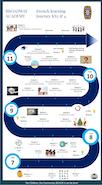
Year 7 Curriculum
Year 7 RE at Broadway Academy begins with an introduction to the six major world faiths via a thematic study on the different conceptions of God across different world faiths. This provides an initial exposure to different faiths and world views. Each unit ends with a key word knowledge test and an extended writing assessment where pupils are tested for basic religious literacy and get to practice formulating well developed written responses expressing their own personal understanding on various inquiry questions embedded within each unit for example ‘Does the idea of God add value to people’s lives?’
Year 8 Curriculum
Year 8 RE at Broadway Academy commences with an introduction to the problem of evil and suffering in our world. Pupils are invited to assess this from a philosophical standpoint, beginning with a dissection of what constitutes evil and how it is caused, before moving on to two religious cases studies on Christian and Buddhist responses to evil. In the second half term pupils are exposed to a thought-provoking analysis of life after death and how various Christian, Buddhist, Sikh and Hindu and non-religious cultures deal with issues surrounding death and gaining an understanding of the key concepts of reincarnation, karma, judgement, and afterlife. Following this insight pupils begin a unit laying the groundwork for further in-depth study at KS4 on their GCSE religions which are Islam and Christianity. However, at KS3 pupils are introduced to different denominations within Islam and Christianity, their corresponding places of worship and sources of authority for the two major world faiths such as scriptures, and religious leadership.
Pupils then begin the summer term focusing on a cross curricular unit on religion and art. This develops pupils’ knowledge and experience of the impact of the divine and the spiritual on the visual formations we see in different cultures around the world. The unit culminates with the opportunity for our pupils to enter a national competition on the Spirited Arts. At the end of the year pupils complete a thematic study of anti racism, looking at how world religions at their core have been a force for anti racism and spoken against all forms of discrimination.
Year 9 Curriculum
Year 9 RE at Broadway spans two key stages. As such the first half of the year begins with an Introduction to Philosophy targeting the development of (religious) literacy amongst our pupils by introducing key philosophical approaches to the existence of God such as the Teleological, Ontological and Cosmological Arguments. Pupils are therefore able to build on knowledge gained regarding the belief in the existence of God in Y7 and Y8 RE in a more thorough way. Pupils then progress to the unit on ethics looking at various moral dilemmas and understanding how the branch of philosophy that deals with our moral choices is put into action in day-to-day life. Pupils are introduced to key ethical approaches which are compared against religious approaches. Y9 pupils then build upon and further develop knowledge gained in the Muslim and Christian Sources unit from Year 8, with a focus Interpretations. The aim of this unit is to develop the acceptance of diversity and mutual respect and tolerance, by emphasising that even within these two major faiths that difference of opinion in interpretations does exist and is accepted among the faithful.
In the second half of the year Y9 pupils will commence their GCSE course content, beginning with a unit on Christian beliefs completing a systematic KS4 level study of core Christian Beliefs. Pupils will then move onto studying a unit on Marriage and Family life from a Christian perspective, before completing their final unit on Living a Christian Life.
Year 10 Curriculum
Year 10 RE at Broadway takes place within the confines of the core GCSE course requirements. In Y10 pupils begin studying the Islamic counterparts to the three units studied in Y9 based on Christianity. These include Muslim Beliefs, Crime and Punishment from an Islamic perspective, and finally moving on to Living a Muslim Life. Pupils in Year 10 will also have ample opportunities to perfect exam technique preparing them for GCSE examination over the year, with regular sessions on how to approach GCSE style questions and develop well formulated and reasoned written pieces that include a solid understanding of religious practice amongst the two largest faith communities in the world and how these can show similarities and differences.
Year 10 will develop religious literacy amongst pupils by the introduction and persistent use of key religious terminology as an assessment criterion amongst teachers of Religious Education at Broadway.
Year 11 Curriculum
Year 11 RE at Broadway will continue with the core GCSE content covering the remaining two units of study. The first will be a study of Peace and Conflict within Islam and the second will examine Matters of Life and Death in Christianity. In the second term the focus of course, content will shift towards perfection of examination technique will specific lessons dedicated to answering the 5/12 marker questions according to the Edexcel GCSE Religious Studies B course and on revision of all KS4 units of study. Year 10 and 11 pupils will be assessed on key knowledge of both terminology and concepts at the end of each unit on prior knowledge in order to monitor progress and spot areas for development. Most pupils will be able to confidently articulate justified opinions on issues giving personal, religious and non-religious views.
Years 12 & 13
Homework
Completion of coursework for homework
Examination
Pupils receive two hours of RE lessons per week and are assessed through A01 and A02 skills. They will be assessed by a final external written examination:
Paper 1: Religion and Ethics through Christianity 50%
Paper 2: Religion, Peace and Conflict through Islam 50%
Whats Next
Religious Education helps us understand other people better, and helps us recognise, develop and express our own values and beliefs. This subject is useful for a variety of career options, in particular those that demand analytical and writing skills (e.g. journalism, law, politics) and the caring professions (e.g. medicine, social care)
Religious Education is a well-respected GCSE and A Level option. A Level Philosophy and Ethics works well alongside other Humanities, but is particularly popular alongside the sciences as it provides a good underpinning for Medicine due to compulsory Medical Ethics section. It also provides critical thinking and analytic skills that are well suited to careers in Law, Media and Politics.
A recent Times poll revealed that the business world favours philosophy graduates above all others. Barristers or solicitors benefit from training in philosophy as they have been taught to examine and dissect arguments, even cabinet ministers find a philosophic training useful as they seek to master complex ‘briefs’ and to analyse opposing arguments.
What will I gain from a study of Religious Education?
• The opportunity to study a wide range of subjects using a variety of approaches.
• An ability to handle sensitive topics intelligently and with circumspection.
• Critical skills and the ability to argue my case.
• An appetite for the ‘search for wisdom’
• Integration of intellectual and personal formation
• Challenges to my own prejudices and assumptions
• An in-depth exploration of some of the most important questions I will ever ask.
• An appreciation of complexity and paradox in the role of religion in society