Welcome to Sixth Form
Academic
Click for a comprehensive list of all the subjects available to study in our Sixth Form.

Sports
If you’re passionate about sports and want to stay on top of your academic game, click the arrow below.
Support
Mr Stewart, Ms Godsil and the sixth form team play a crucial role in our sixth form, click on the arrow below to find out more.
Enrichment
Information about our Enrichment Programme can be found here.
Apply Here
Click the arrow below to be redirected to our enrolment web page.
Bursary?
A Sixth Form Bursary is a financial support fund provided by the government to help students aged 16 to 19 stay in education or training after GCSEs. Found out about it here.
About Our Sixth Form
Subjects
- Subjects.
- Applied Business
- Art
- Biology
- Bridging Course
- Btec Sports Extended
- Business
- Chemistry
- Criminology
- English
- Geography
- History
- HSC Certificate
- HSC Extended
- Law
- Level 3 Computing
- Level 3 Early Childhood Development
- Level 3 Mental Health: Individuals & Society
- Level 3 Science
- Mathematics
- Physics
- Philosphy and Ethics
- Psychology
- Sociology
- International Students


AQA Level 3 Certificate in Applied Business
Course Structure:
This course runs for two years. You will study six units and if you are successful you will receive a grade of Pass, Merit or Distinction (equivalent to an E, C or A).
PLEASE NOTE THAT THIS COURSE IS SUBJECT TO CHANGE.
What will I study?
Mandatory Units
1. Financial Planning and Analysis (1 hour 30 mins exam). Planning, recording and monitoring finances .
2. Business Dynamics (internally assessed assignment). Understanding organisations and what makes them successful.
3. Entrepreneurial Opportunities (externally assessed assignment). Understanding enterprising behaviour and the risks associated with it and how to try to overcome these.
4. Managing and Leading People (1 hour 30 mins exam). Leadership and management skills needed to get the most out of your workforce.
5. Developing a Business Proposal (internally assessed assignment). Investigating, developing, presenting and reviewing a proposal for a new business.
Optional unit (internally assessed assignment)
One unit from:
E-Business Implementation
Managing an Event
Marketing Communications
What can I do with A level Business?
Banking Insurance Accountancy
Administration Personnel management Marketing
Sales Teaching Logistics
Desired entry requirements:
At least a grade 4 in Maths and English Language. Studying GCSE Business Studies is not essential.
Where can I find out more about studying Business Studies at Broadway Academy?
Ask Mr Mound or visit www.aqa.org.uk

A Level Art and Design
Exam Board: AQA
The qualification gives learners the opportunity to develop and explore a theme of their own choosing. They will need to be able to research independently and make critical/contextual links using a variety of media. Students are also expected to annotate their work as it develops.
Course Structure:
The ‘A’ Level Art and Design course is studied over 2 years and contains two components as detailed below. The components are the personal investigation and externally set task. The course does require commitment from students and learners are allocated 5 hours teaching time per week, with an expectation that they will produce 5 hours additional independent work weekly.
In Year 13 students are required to produce an accompanying 1000-3000 word written study to support their personal investigation. They also have a 15 hour exam over three or more days.
What will I study?
Component 1: Personal investigation—
This is a practical investigation supported by written material. Students are required to conduct a practical investigation, into an idea, issue, concept or theme, supported by written material. The focus of the investigation must be identified inde- pendently by the student and must lead to a finished outcome or a series of related finished outcomes. The investigation should be a coherent, in-depth study that demonstrates the student’s ability to construct and develop a sustained line of reasoning from an initial starting point to a final realisation.
Component 2: Externally set assignment
Separate question papers will be provided for each title. Each question paper will consist of a choice of eight questions to be used as starting points. Students are required to select one. Learners will be provided with exam papers on 1 February, or as soon as possible after that date.
What can I do with A Level Art and Design
Set Designer, Sculptor, Painter, Architect, Video Games Designer, Photographer, Art Teacher, Web Designer, Graphic Designer, Art Director, Creative Director, Typographer, Fashion Designer, Artist, Jewellery Designer, Costume Designer, Videographer, Ceramicist, Curator, Urban Designer, Landscape Designer etc.
This is a popular course and is beneficial when studied in collaboration with a wide variety of subjects. It’s blend of practical and theory elements make it quite different from other subjects.
The demanding written elements mean that students must have a good grasp of written English.
Desired entry requirements:
At least grade 5 in GCSE Art.
Where can I find out more about studying ‘A’ level Art at Broadway?
Ask any member of the art staff in the red area.

Exam Board: AQA
Course Structure:
In Year 12 students study for an AS Level in Biology with AQA. This involves the study of four units; Bio- logical molecules, Cells, Organism exchange substances with their environment and Genetics infor- mation, variation and relationship between organisms, which are assessed through examination. Paper 1 and Paper 2 will be examined in May/June on each academic year. All Units are equally weighted.
In Year 13 students study for an A Level in Biology with AQA. This involves the study of further four
units; Energy transfer between organisms, Organism respond to change in their environment, Genetics and control of gene expression, which are assessed through examination. Paper 1, Paper 2 and Paper 3 will be examined in May/June of each academic year.
All Units are equally weighted.
What will I study?
Year 12
Section 1 (Biological Molecule): Biological molecules, Nucleic acid
Section 2 (Cells): Cell structure, Transport across cell membrane, cell recognition and immune system
Section 3 (Organisms exchange substances with their environment) Exchange, Mass transport
Section 4 (Genetic information, variation and relationship between organisms) DNA, Genes and protein synthesis, Genetic diversity, Biodiversity
Year 13
Section 1 (Energy transfer in and between organism): Photosynthesis, Respiration, Energy and ecosys- tem
Section 2 (Organism respond to change in their environment) Respond to stimuli, nervous coordination and muscle, Homeostasis
Section 3 (Genetics, populations, evolution and ecosystem) Inherited changes, population and evolution, population in ecosystem
Section 4 (The control of gene expression)Gene expression, Recombinant DNA technology
What can I do with Biology?
| Pharmacy | Biomedical Science | Medicine |
| Biology | Applied Biology | Microbiology |
|
Environmental Studies Desired entry requirements: |
Ecology | Zoology |
A grade 6 or better in two or more of the following GCSE Science courses:
GCSE Core Science ,GCSE Additional Science and GCSE Further Additional Science
Year 12 (AS Biology) Paper 1
50% of AS content including practical skills Paper is 1 hour and 30 minutes
Multiple choice, short answer and extended response
Paper 2
50% of AS content including practical skills Paper is 1 hour and 30 minutes
Multiple choice, short answer and extended response Year 13 (A Level Biology)
Paper 1
AS Biology content including practical skills Paper is 2 hours
Multiple choice, short answer and extended response
35% of A level
Paper 2
A2 Biology content including practical skills Paper is 2 hours
Multiple choice, short answer and extended response 35% of A level
Paper 3
Mix of AS biology and A2 Biology including practical skills and mathematical skills 78 marks
Paper is 2 hours
Multiple choice, short answer and extended response (including a 25 mark essay question) 30% of A level
Where can I find out more about studying Biology at Broadway?
Ask Mr R Nana or Mrs R Akram @ Broadway Academy

Broadway Academy Sixth Form offers a unique and inclusive learning environment that provides tailored support for students who may have additional needs. Our Bridging Course includes a range of programs designed to help students develop essential skills, build confidence, and prepare for life beyond school. Here’s how our offerings can benefit you:
- Functional Skills English and Maths (Entry Level): These courses help you strengthen your core literacy and numeracy skills, providing a solid foundation for everyday tasks, further education, and the workplace.
- Digital Skills: In a world where technology is everywhere, our digital skills program ensures you can confidently use computers and other digital tools, opening doors to modern careers and further education.
- Employability: Learn the essential skills employers look for, such as teamwork, communication, and problem-solving, while getting ready to succeed in job applications and interviews.
Read More...
Course Title: Ascentis Entry Level Certificate In Employability Course Code: 600/9015/7 Entry 1Exam Board: Ascentis
Course Description:
This Entry Level Course enables students to gain a wider understanding of the world of employment. Students will be equipped with the relevant skills and knowledge to support their progression onto working life. Each student will need to complete 14 credits, which will grant them a Certificate of completion for this Course. Topics covered include; Key Working Skills, Money Management, Performance Improvement, Managing Challenges, Health & Safety Precautions, Job Application Process and so forth. This Course is taught at a level suitable for SEN students.
Entry Requirements:
At least 2-5 GCSE Qualifications.
Assessment:
Students will be assessed by producing a quality portfolio of evidence which is in line with the course assessment requirements. Each student will have a physical folder, in which they will collate all of their documents. There is no written exam for this course.
Future Opportunities:
Students can then go on to complete a specialist Level 1 Course, as they’ve now been given the foundational ground to progress onto a higher-level qualification. There is also the option to apply for a job, having been equipped with the practical tools taught on this course to enter the world of work.Website: For more details, feel free to contact Miss Chaza (strc@broadway-academy.co.uk) or Ms Williams (stw@broadway-academy.co.uk).
You can also visit the Ascentis Website: https://www.ascentis.co.uk/qualifications/progression.
- Independent Living: Gain practical skills for daily life, from managing finances to cooking, empowering you to live independently and make confident decisions.
- Sports Leaders: This program promotes leadership, teamwork, and communication skills through sports, enabling you to become a role model and inspire others.
Read more....
Level 2/3 Qualification in Sports LeadershipExam Board: Leadership skills foundation.
Introduction.
The course offers a unique blend of developing key leadership skills using sport as a driving tool. Depending on the level you are completing you must complete 10 hours of leadership (level 2) or 30 hours (level 3) either linked with the Centre or within the local community, e.g. leading a group of primary school children in curriculum time or any leadership that is undertaken outside of school curriculum time, e.g. leading an extracurriculars group; leading at a community sports clubs.
The course has blend of theory and practical elements where you will be leading practical sessions, and you will be learning about the vital ingredients of effective leadership.
Course Structure:
Level 2– 10 hours of leadership to be completed and recorded in your learning journal. Level 3– 30 hours of leadership to be completed and recorded in your learning journal.
What will I study?
Effective leadership. Leadership behaviours Planning a session Risk assessment. The qualities of a good leader.
What can I do with sports leadership?
Coaching/ mentoring/activities organiser/teaching.
Desired entry requirements:
Have an interest in leadership/sports. Where can I find out more about studying sports leadership at Broadway?Ask Mr Arshad or visit Leadership Skills Foundation
With these programs, Broadway Academy Sixth Form ensures that every student receives the support they need to reach their full potential, both in school and beyond.

Pearson BTEC Level 3 National Extended Certificate in Sport.
Exam Board: EdExcel
Course Structure:
Year on year the sport and active leisure sector outperforms the rest of the UK economy; this has been a trend since the end of the economic recession of the late 1990s, and researchers predict this will continue to be the case for years to come, long after the sports legacy of the London 2012 Olympic and Paralympics Games.
The course is taught over two years and is 45% externally assessed through one written examinations and two external written tasks and 55% internally assessed through coursework in the form of various assignments.The qualifications are graded at pass, merit, distinction or distinction* level and these grades are broadly the same as a grade 4 to 9 at A level. The qualification is the equivalent to 1 A Level.
What will I study?
The nine units to be studied during the course are:
Unit 1* (Year 12): Anatomy and Physiology (external examination)
Unit 2* (Year 12): Fitness Training and Programming for Health, Sport and Well-being (external written task
Unit 3* (Year 13): Professional Development in the Sports Industry
Unit 5 (Year 13): Application of Fitness Testing
Additional Qualifications available through the Directorate:
Broadway School Sixth Form will also give you practical sport qualifications that include:
Level 2 Sports Leadership (Year 12)
Level 3 Sports Leadership (Year 13)
Duke of Edinburgh Award (Silverñ Year 12/13)
Registration to City Of Birmingham Rockets/Broadway basketball playing in CBL.
Registration to Broadway Continental Football academy playing in ECFA.
Registration opportunities to participate in the Erdington Judo academy.
Registration opportunities to participate in the Broadway cricket academy.
What can I do with BTEC Sport?
Sports CoachingFitness IndustryOutdoor Education
Sports Development Sports Management Sports Science
Leisure Industry Teaching Elite Sport development
Sports Physiotherapist
Desired entry requirements:
Grade 4 in English Language and Maths (desirable)
Grade 4 or above in Biology
Where can I find out more about studying Sport at Broadway?
Ask Mr Arshad or visit http://qualifications.pearson.com/en/qualifications/btec-nationals/sport-2016.html

AS and A Level Business
Exam Board: AQA
Course Structure:
This course runs for two years. There is no coursework. You will sit an A/S level exam at the end of year 12, but this will not count towards your final A level grade.
The AS exam consists of 2 papers covering parts of the topics below. There will be a combination of mul- tiple choice questions, short answer questions and longer answer data response and case study ques- tions.
The A level exam consists of 3 papers covering all of the topics below. The type of questions will be the same as for AS level.
What will I study?
- What is business? Understanding the different types of business and the external environment.
- Mangers, leadership and decision making. The role and effectiveness of managers.
- Decision making to improve marketing performance. Setting and achieving marketing objectives. Decision making to improve operational performance. How to improve an organisation’s efficiency. Decision making to improve financial performance. Break—even, cash flow, revenue and profit.
- Decision making to improve human resource performance. The use of effective HR management to maximise performance.
- Analysing the strategic position of a business. Strategic options and the influence of the external environment.
- Choosing strategic direction. Where to compete and how to compete.
- Strategic methods: how to pursue strategies. Assessing strategic options.
- Managing strategic change. Managing change, culture and implementation and why some strategies fail.
What can I do with A level Business?
Banking, Insurance, Personnel Management, Logistics, Teaching, Accountancy, Marketing, Administration, Sales.
Desired entry requirements:
At least a grade 5 in Maths and English Language and three other GCSEs at grade 5 or above. Studying GCSE Business Studies is not essential.
Where can I find out more about studying Business Studies at Broadway Academy?
Ask Mr Mound or visit www.aqa.org.uk

Introduction
The AQA A Level Chemistry course covers physical, inorganic, and organic chemistry. It explores the periodic table, transition metals, and organic compounds like alkanes and alcohols. Practical experiments are essential, and assessment is through three exams after two years. It’s suited for students aiming for science, engineering, or medicine.
Course Structure:
In Year 12 students study for an AS Level in Chemistry with AQA. This involves the study of three units; Physical Chemistry, Inorganic Chemistry and Organic Chemistry which are assessed through examination. Paper 1 and Paper 2 will be examined in May/June on each academic year. All Units are equally weighted.
In Year 13 students study for an A Level in Chemistry with AQA. This involves the study of further three units; Physical Chemistry, Inorganic Chemistry and Organic Chemistry which are assessed through examination. Paper 1, Paper 2 and Paper 3 will be examined in May/June of each academic year.
What will I study? Year 12
Section 1 (Physical Chemistry): Atomic structure, amount of substance, bonding, Energetics, Kinetics, Equilibria, Redox
Section 2 (Inorganic Chemistry): Periodicity, Group 2 Alkaline Earth Metals, Group 7 Halogens, relevant practical skills
Section 3 (Organic Chemistry): Introduction to Organic Chemistry, Alkanes, Halogenoalkanes, Alkenes, Alcohols, Organic Analysis
Year 13
Section 1 (Physical Chemistry): Thermodynamics, Kinetics, Equilibrium Constant Kp, Electrode Potentials, Acids & Bases
Section 2 (Inorganic Chemistry): Periodicity, Transition Metals, Reactions of Inorganic Compounds
Section 3 (Organic Chemistry): Nomenclature & Isomerism, Carbonyl Groups, Aromatic Chemistry, Amines, Polymerisation, Amino Acids, Proteins & DNA, Organic Synthesis, Structure Determination, Chromatography
What can I do with A Level Chemistry
Pharmacy Biomedical Science Materials Science Chemistry Environmental Studies Biochemistry Food Chemistry Geochemistry Physical Chemistry Forensic Chemistry Chemical Engineering Medicine
Desired entry requirements:
Minimum of 2 Grade 6s in the Chemistry Units of either GCSE Combined or GCSE Chemistry AND grade 6 in GCSE Mathematics and GCSE English.
Where can I find out more about studying Drama and Theatre Studies at Broadway?
Ask Mr Ahmed or Mr Haidar

WJEC Level 3 Criminology
Course description
The WJEC Level 3 Diploma in Criminology is an Applied General Qualification. This means that each unit within the qualification has an applied purpose which acts as a focus for the learning in the unit. This means that each unit within the qualification has an applied purpose which acts as a focus for the learning in the unit. Students are re- quired to look at causes of crime through the study of published cases in the media and beyond. They are also required to assess and evaluate campaigns that have led to changes in the law and the way society works. This subject draws from Law, Sociology and psychology.
Course Content
Curriculum in Year 1
Unit 1: Changing Awareness of Crime (Controlled Assessment): The purpose of this unit is for learners to plan campaigns for change relating to crime.
Unit 2: Criminological Theories (Examined): The purpose of this unit is for learners to apply their under- standing of the public perceptions of crime and campaigns for change studied in Unit 1 with criminological theories to examine how both are used to set policy.
Curriculum in Year 2
Unit 3: Crime scene and court room (Controlled Assessment): Through this unit, learners will develop the understanding and skills needed to examine information in order to review the justice of verdicts in criminal cases.
Unit 4: Crime and punishment(Examined):The purpose of this unit is for learners to develop skills in order to evaluate the effectiveness of the process of social control in delivering policy in practice
Entry requirements
You need at least 5 4 grades in above and at least a 4in English Language or Maths is essential.
Progression:The WJEC Level 3 Diploma in Criminology has elements of psychology, law and sociology that complement studies in humanities. The main purpose of the qualification is to support access to higher education degree courses, such as:
- BSc Criminology BA Criminology
- BA Criminology and Criminal Justice BSc (Hons) Criminology and Psychology LLB (Hons) Law with Criminology
- BA (Hons) Criminology and Sociology BA (Hons) Criminology
- BSc (Hons) Psychology and Sociology BSc Criminology with Law
See Mrs Godsil if you would like to have any more information.
A Level Geography Exam Board: AQA
Course Structure:
Students will study both Human and Physical Geography at A Level. The course is designed in order to build upon knowledge gained in GCSE Geography and explores contemporary geographical issues in greater detail. A Level Geography course encourages students to critically assess the world around them through structured debates and the interpretation of cutting edge academic literature. Students will be required to formulate and justify opinions on a range of issues.
Topics for component 1 include; Water and Carbon Cycles, Hot Environments , Plate Tectonics and Seismic Hazards and Ecosystems in the British Isles.
Topics for component 2 include; Global Systems and Global Governance, The Nature and Importance of Places, Contemporary Urban Environments and Population and the Environment. Component 3 is comprised of both Human Fieldwork and a Physical Fieldwork.
How is A Level Geography Assessed?
Component 1: Physical Geography – 2hr 30 minute written exam , 40% of A Level (120 marks)
Component 2: Human Geography – 2hr 30 minute written exam , 40% of A Level (120 marks)
Component 3: Geography Fieldwork Investigation – Coursework, 20% of A Level (60 Marks)
What can I do with A Level Geography?
Geography A Level prepares students excellently for the further study of Geography at University. Additionally, it provides students with a range of analytical and transferable skills that can be utilised in all are- as of further study or work, following on from A Level. A non-extensive list of career opportunities are highlighted below.
- Pilot
- GIS Specialist
- Town Planner Environmental Consultant
- Air Traffic Controller
- Teacher/Lecturer Mapping Software Designer Lawyer
- Cartographer Countryside/Conservation Manager
- Environmental Engineer
- Surveyor
- Academic
- Medicine
- Volcanologist
Desired entry requirements:
GCSE grade C in Geography, English, Maths and Science.
Where can I find out more about studying Geography at Broadway?
Ask Mr Mohammed or Mrs Cordon Visit www.aqa.org.uk

A Level History
Exam Board: AQA
Course Structure:
A level History further develops the skills students have shown in their GCSE studies. Students will get an opportunity to further develop their historical skills; they will learn how to operate like a professional historian and will gain valuable skills that will serve them well in a wide range of disciplines in the future. They will also study topics that are accessible and relevant to the modern world – gaining new insights into today’s politics, society, economy and world affairs. Students study for two examined units, and one Non–Examined Assessment (coursework). Students will take an AS exam at the end of Year 12 and full A level exams at the end of Year 13. The NEA is researched and written during the course and finished by Easter of Year 13.
The examined units are:
1C: The Tudors: England 1485-1603
2R: The Cold War, 1945-1991
In Year 12 students study roughly half of each period and are examined on their knowledge of that period only. In Year 13, students study the remainder of the period and are examined on their knowledge of the whole topic. Each exam in Year 13 is worth a total of 40% of the marks.
The remaining 20% of the marks come from researching and writing a Non-Examined Assessment piece with the title: “The decline of the Ottoman Empire was driven mostly by the growth of nationalism in Europe.” Assess the validity of this view with reference to the years 1798-1914?” This involves writing an essay of approximately 4000 words.
What can I do with an A’ level in History?
Social worker Teacher Governmental research
Lecturer Charity work Politics Human resource management Probation Journalism Advertising Religious organisations Marketing
Counselling Housing officer Corporate research Governmental services
Desired entry requirements:
6 GCSEs grade 9-4 (including English and Maths with a GCSE History not essential)
Where can I find out more about studying History at Broadway?
Ask Mr Connolly or Mr Griffiths
Websites:
www.aqa.org.uk – exam board information
www.besthistorysites.net – A portal created for students, history educators, and general history enthusiasts
http://www.bbc.co.uk/learning/subjects/history.shtml
 BTEC Level 3 Health and Social Care Certificate
Exam Board: Edexcel
Course Structure:
BTEC Health and Social Care will give you an understanding of the way people think and why people behave in certain ways. You will learn a variety of skills including analytical thinking, im- proved communication, problem solving and many more that will prepare you for an exciting future with the possibility of a range of fantastic careers. The course runs over two years and the Diploma will cover 8 units and the Extended Certificate will cover 4 units.
What will I study?
Year 1:
Working in Health and Social Care (Exam)
This unit enables learners to explore what it is like to work in the health and social care sector. They will also learn about the organisations themselves and the different settings in which services are delivered depending on the needs of the service user. This unit will also enable your learners to understand how specific work roles such as a nurse or a social worker are monitored.
Meeting individual Care and Support Needs. (Internal assessment)
This unit enables learners to understand the principles and practicalities that underpin the way that care and support meet the needs of individuals. The needs of the individual are paramount. Learners will need to understand that with- out these principles and values, the care and support provided might well be less effective.
Year 2:
Sociological Perspectives (internal assessment)
In this unit, you will learn about the different psychological perspectives that have been put forward and how these approaches have influenced thinking and practices in meeting and supporting service user needs.
Human Lifespan (exam)
This unit will develop your knowledge and understanding of patterns of human growth and development. You will learn about a number of theories and models to explain and interpret behaviour through the human lifespan. You will study the interaction between the physical and psychological factors of the ageing process, and how this affects confidence and self-esteem, which in turn may determine how individuals will view their remaining years.
Entry to university for related degrees
Apprenticeships and NVQ training
What career can Health and Social Care qualifications provide?
- Social workerPrimary and Early Years teaching
- Nursery nurse
- Care worker
- Classroom assistant
- Nursing
- Midwifery
- Occupational therapist Learning Mentor
- Youth worker
- Diagnostic Radiographer
- Dietician
Desired entry requirements:
5 GCSE grade and at 4 in English or Math OR Btec Level 2 merit grade.
Where can I find out more about studying Health and Social Care at Broadway?
Ask Miss Begum
Pearson Level 3 Alternative Academic Qualification BTEC National in Health and Social Care (Extended Certificate)
Who is this qualification for?
The Pearson Level 3 Alternative Academic Qualification BTEC National in Health and Social Care (Extended Certificate) is an Alternative Academic Qualification (AAQ) designed for post-16 students with an interest in health and social care and aiming to progress to higher education as a route to graduate level employment.
Equivalent to one A Level in size, it is suitable for students looking to develop their applied knowledge and skills in health and social care alongside two A Levels.
What will the student study as part of this qualification?
The qualification has been developed in consultation with higher education representatives to ensure students have the knowledge, understanding and skills they need to progress to, and thrive, in higher education.
The qualification has three mandatory units covering the following topics:
- Human Lifespan and Development – PIES and factors affecting growth and development, interventions and the different professionals providing care and treatment
- Human Biology and Health – Human body structure and systems, normal physiological functioning and the impact of common disorders
- Health and Social Care Practice – Core principles, values and legislation that underpin and influence health and social care, and the effect of social determinants on an individual health status
Students have a choice from four optional units covering the following topics:
- Health, Social Policy and Wellbeing – Public health policy and its influences, including health-related organisations/groups and a range of strategic factors
- Promoting Health Education – Health education, its purpose and use of different approaches and models to achieve positive health outcomes
- Safe Environments in Health and Social Care – Appropriate provisions in services relevant to different needs;
- Health Science – Types of infections and their potential impact on a local, national and international scale
What further learning will this qualification lead to?
This qualification can lead to progression to the following degrees:
- BSC Nursing
- BSC Social Work
- BSC Subjects Allied to Health.

A Level Law
Exam Board: AQA
Course Overview
Studying Law gives students an understanding of the role of Law in today’s society and raises their awareness of the rights and responsibilities of individuals. By learning about legal rules and how and why they apply to real life, students also develop their analytical ability, decision making, critical thinking and problem-solving skills. All these skills are highly sought after by higher education and employers
Cognitive and problem-solving skills: use critical thinking, approach non-routine problems applying expert and creative solu- tions, use systems and technology
Intrapersonal skills: communicating, working collaboratively, negotiating and influencing, self-presentation Interpersonal skills: self-management, adaptability and resilience, self-monitoring and development.
What will you study
The nature of law and the English legal system
Criminal law
Tort
Law of contract
Is law for me?
Sure! You do have to enjoy/be proficient in essay writing 🙂 You will enjoy it if you are aware of the difference between right and wrong, or between justice and injustice, will enjoy learning about the law. Helping to protect the rights of individuals and companies has a great feel good factor.
And don’t think the law is a fuddy-duddy business just for old men… you’ll meet lots of bright, ambitious people in the legal profession.
People just like you! Lots of GCE Law students also study Business Studies, Government & Politics, Critical Thinking, Philosophy, History, English, Psychology and Sociology.
Skills Needed
A GCE in Law will enhance your chances of being accepted into university, either to take a law degree, a social science or business degree, or any other course of study.
So whether you want a career in the law, or in other areas like education, human resources, finance or business, A Level Law can really open doors for you.
Entry Requirement
6 GCSE 9-4 with Maths and English
Level 3 AAQ – BTEC National in Computing (Extended Certificate)
Exam Board: Pearson Edexcel
Course Structure:
This course runs for two years and is equivalent in size to one A Level. There are 4 mandatory units of which 2 are externally assessed. The other 2 are assessed through a Pearson Set Assignment Brief, marked internally and are subject to external verification.
external assessment carries a 66% weighting.
Who is it for?
The Extended Certificate is for students who are interested in learning about the computing sector alongside other fields of study, with a view to progressing to a wide range of higher education courses, not necessarily in computing-related subjects. It is designed to be taken as part of a programme of study that includes A Levels.
What will I study?
The qualification has four mandatory units covering the following topic areas:
- Programming Fundamentals – Computing concepts and their application through programming and design methodologies
- Computer Network Security and Encryption – Types and origins of security threats, relevant regulations, methods and tools to detect and prevent threats, and concepts and algorithms of encryption
- Human-Computer Interaction – User experience (UX) and user interface (UI) design principles and their application in creating interfaces; key principles of HCI design, including meeting diverse needs of users
- Practical Programming – Principles of computer science related to software development and their application in developing and managing a software solution
Which subjects will complement this qualification?
The following subjects would be suitable to combine with this qualification as a part of a larger study programme:
- Business
- Mathematics
- Physics
What further learning will this qualification lead to?
This qualification can lead to progression to the following degrees:
- BSc Computer Science
- BSc Software Engineering
- BA Computer Games and Animation.
Desired entry requirements:
At least a grade 4 in Maths and English, and three other GCSEs at grade 4 or above. Studying GCSE Computer Science is not essential but would be of great advantage to you.
Where can I find out more about studying Computer Science at Broadway Academy?
- Ask Miss Parker or Mr Miah
Pearson Level 3 Alternative Academic Qualification BTEC National in Early Childhood Development (Extended Certificate)
Who is this qualification for?
The Pearson Level 3 Alternative Academic Qualification BTEC National in Early Childhood Development (Extended Certificate) is an Alternative Academic Qualification (AAQ) designed for post-16 students with an interest in Education and Early Years and aiming to progress to higher education as a route to graduate level employment.
Equivalent to one A Level in size, it is suitable for students looking to develop their applied knowledge and skills in Education and Early Years as part of a study programme alongside A Levels.
The qualification has been developed in consultation with higher education representatives and sector experts to ensure students have the knowledge, understanding and skills they need to progress to, and thrive in, higher education.
The qualification has four mandatory units covering the following topics:
Children’s development – Children’s developmental progress from birth up to eight years, including the theories, principles and factors relating to development, and the potential impact of a range of factors on a child’s progress through the developmental milestones.
Keeping Children Safe – Health and safety and safeguarding responsibilities of an individual working in an early years setting; emergency best practices and when to address concerns about a child’s welfare.
Play and Learning – The concept of play, the influence of theories and approaches to play, and the benefits of play and learning activities for children.
Research and Reflective Practice – The influence of research findings on policy and provision for children and how this influences the behaviours and expectations of an individual working in an early years setting.
What further learning will this qualification lead to?
- Nursing – BSc (Hons) Adult Nursing, Nursing – Child – BSc (Hons)
- Teacher Training – Childhood and Early Years Studies BA (Hons)
- Social Work – BA (Hons) Social Work
- Psychology – Psychology BSc (Hons).
Cambridge OCR Level 3 Alternative Academic Qualification Cambridge Advanced National in Mental Health: Individuals & Society.
Who this qualification is for:
The Cambridge OCR Level 3 Alternative Academic Qualification Cambridge Advanced National in Mental Health: Individuals & Society (Extended Certificate) is for students aged 16-19 years old. It will develop knowledge, understanding and skills that will help prepare you for progression to undergraduate study and are relevant to mental health and wellbeing, within the broader health and social care sector.
You might be interested in this qualification if you want to learn key knowledge and understanding in the subject and apply what you learn to practical, real-life contexts, such as:
Understanding the range of factors that can influence our mental health and the potential effects they can have.
- Identifying strategies that can be implemented to make a positive difference in the lives of individuals and communities.
- Exploring existing provision and services involved with improving, maintaining and promoting healthier populations and environments.
- Using monitoring tools to understand individuals’ mental health and wellbeing, and considering the factors that influence us and the strategies that can be used to effectively improve the lives of individuals.
- Understanding societal attitudes to mental health and how they have changed over time.
- Understanding the impacts of social media and global issues on mental health and wellbeing.
What you will study when you take this qualification
These are the mandatory units – you must take all these units:
F400: Fundamentals of mental health and the individual
F401: Mental health, wellbeing and society
F402: Supporting and promoting mental health and wellbeing in organisations
F403: Community-based support for mental health and wellbeing
These are the optional units – you must take one of these units:
F404: Supporting mental health and wellbeing with physical activity
F405: Supporting mental health and wellbeing with outdoor and creative activities
The types of courses you may progress to
Both the subject-specific knowledge, understanding and skills, and broader transferable skills developed through these units, will help you progress to further study in related areas such as:
- BSc (Hons) Mental Health and Wellbeing
- BA (Hons) Counselling, Mental Health and Wellbeing
- BSc (Hons) Mental Health and Wellbeing Coaching
- BSc (Hons) Health and Wellbeing • BSc (Hons) Health Studies

BTEC Level 3 National Extended Certificate in Applied Science
BTEC Level 3 (equivalent to one A level)
Exam Board: Edexcel
Course Structure:
This vocational course involves the study of two mandatory units in Year 12 and two units in Year 13. It is most suited for students who enjoy Science but do not want to specialise in totally in one area. The three mandatory units and one optional unit consist of two assignments (internal), one exam and synoptic exam (External). These assignments are in form of written essays, practical investigation and presentations.
What will I study?
Unit 1: Principles and Applications of Science (exam)
The aim of this unit is to enable learners to develop understanding of key science concepts in biology, chemistry and physics. This unit will be assessed through a written exam worth 90 marks, which is set and marked by Pearson. The exam will last one hour and 30 minutes.
Unit 2: Practical and Scientific Procedures and Techniques (assignment)
The aim of this unit is to enable learners to gain the knowledge and skills to use a range of practical techniques.
Unit 3: Scientific investigation skills(internal exam)
Learners will cover the stages involved and the skills needed in planning a scientific investigation: how to rec- ord, interpret, draw scientific conclusions and evaluate. This unit will be assessed through a written task book (Part B) worth 60 marks.
Unit 8: Physiology of human body systems
Learners will focus on the physiological make up of three human body systems (musculoskeletal, lymphatic and digestive), how the systems function and what occurs during dysfunction.
The highly practical nature of this unit requires that a significant part of this assessment involves records of learners’ practical activities.
Criteria Equivalent AS Grade DISTINCTION* A*
DISTINCTION A
MERIT C
PASS E
What can I do with BTEC Level 3 Applied Science?
- Drug Research
- Forensic Science
- Medical Technician
- Science Technician
Desired entry requirements:
GCSE grade 4 or above. MERIT or above in BTEC Level 2 Applied Science.
Where can I find out more about studying BTEC Level 3 Applied Science at Broadway?
Ask Mr Ahmed or Mrs Akram

A level maths
Examination board :AQA
Course length: 2 years Course overview
A-level Maths provides students with a thorough grounding in the mathematical tools and techniques often needed in the workplace. The logic and reasoning skills developed by studying A-level Maths make sure the qualification is widely respected even in non-mathematical arenas.
A-level Maths is a linear exam. The examinations will take place at the end of the 2 years course. Students can study and sit the AS exams at the end of the first year and receive a free standing qualification. As and A level students can be taught together for the first year. A level Mathematics provides the techniques in Algebra, Geometry, Trigonometry and Calculus that form the fundamental building blocks of the subject.
Mathematical applications make up the remaining third of the qualification and there are various options to suit the needs of individual students.
A-level Maths provides a foundation for further studies in a variety of subjects including Science and Engineering.
Curriculum year 1 Curriculum year 2
As Level A level
Algebra Algebra and functions
Coordinate Geometry Trigonometry
Differentiation Further differentiation and integration Integration
Probability and statistical distribution Numerical methods
Kinematics Differential equations
Binomial distribution Kinematics
Normal distribution Sequences and series
Hypothesis testing Exponentials and logarithms
Vectors Hypothesis testing
Entry requirement:
6 GCSE’s including English.
A Minimum of a grade 7 in mathematics.

A Level Physics
Exam Board: AQA
Course Outline
In Year 12 students study for an AS Level in Physics with AQA. This involves the study of five sections, all of are assessed through examination. All sections will be examined in May/June of each academic year. There are two exam papers which are equally weighted.
In Year 13 students study for an A Level in Physics with AQA. This involves the study of three further mandatory sections plus one of five optional sections. There are three exams with different weightings. All papers will be examined in June of each academic year.
What will I study in Year 12
Year 12/AS only:
Measurements and their errors, particles and radiation, waves and optics, mechanics and materials, electricity.
Paper 1
Measurements and their errors, particles and radiation, waves and optics, mechanics and materials, electricity.
Paper 2
Measurements and their errors, particles and radiation, waves and optics, mechanics and materials, electricity.
Year 13/A-Level Year 2:
Further mechanics and thermal physics, fields, nuclear physics + one of Astrophysics, medical physics, engineering physics, turning points in physics and electronics.
Paper 1
Measurements and their errors, particles and radiation, waves and optics, mechanics and materials, electricity, periodic motion
Paper 2
Thermal physics, fields, nuclear physics (assumed knowledge of previous topics)
Paper 3
Practical skills and data analysis + one of Astrophysics, medical physics, engineering physics, turning points in physics and elec- tronics
Entry Requirement
Minimum of 2 B grades in the Physics Units of either GCSE Core Science, GCSE Additional Science or GCSE Physics AND a grade B in GCSE Mathematics
What can I do with Physics?
- Engineering
- Air pilot
- Medical Physicist
- Astronomer Physics
- Water management
- Air traffic controller
- Radiation officer
- Food Physics
- Nuclear Scientist
- Mathematics
- Geo-Physic
- Forensic Physics
- Materials Science
Ask Mr S Ahmed and visit www.aqa.org.uk OR www.s-cool.co.uk/a-level/Physics

As we begin to diversify and adapt to new cultures and ideas being explored within society, Philosophy and Ethics offers an opportunity to study and understand many of the beliefs and practices followed by so many people both in the UK and globally. The course is broken down into three sections: Christianity, Ethics, and Philosophy of Religion. During the course, we will engage in debate and discussions on a wide range of subjects. We help you to develop your skills in both critical analysis, and written communication. This will culminate into exams at the end of the second year.
Throughout the two years, we will cover a number of topics (detailed below) and help foster a safe and open classroom dialogue in order to work out and comprehend the complexities of religion in the modern day. We employ a number of teaching techniques and assessment types in order to prepare you for the exams. There will also be a number of opportunities for guest speakers who can share their own personal experiences and connections to a wide range of faiths and belief systems.
Finally, Philosophy and Ethics complements a number of other A Levels within the Humanities. For those considering Philosophy and Ethics, they may benefit from considering:
- Sociology
- History
- Law
- Criminology
- Psychology
- Maths
- English Literature
How will I be assessed?
At the end of the two years, there will be two exams, both three hours long.
Paper 1 – Philosophy and Ethics Paper 2 – Christianity and Dialogues
Topics we cover:
Philosophy of Religion
- Arguments for the existence of God
- Religious Experience
- Religious Language
- Miracles
- Self, death, and the afterlife
Ethics
- Ethical theories
- Application of ethics
- Meta ethics
- Free will and moral responsibilities
- Conscience
Christianity
- Sources of wisdom and authority
- God
- Self, death and afterlife
- Good conduct and key moral principles
- Expressions of religious identity
- Christianity, gender and sexuality
- Christianity and Science
- Christianity and secularisation
- Christianity and Migration
Additional Information:
Please feel free to contact the department should you have any questions and we will aim to answer any queries you may have: stpm@broadway-academy.co.uk

A Level Psychology
Exam Board AQA
Course code 7182/1
Description
Psychology is the scientific study of human mind and behaviour. Psychology aims to describe, explain, predict and control behaviour. Ultimately, by being able to do this, we can use our understanding of human behaviour to solve problems faced by human beings and help people to live a happier and healthier life. A level Psychology is a two-year course.
Entry Requirements
5 GCSE’s Grade 5 and above including English and Maths. You also need to enjoy/ be strong in Biology.
Course content
Year 12: Social Influence, Memory, Attachment, Psychopathology (mental illness), Approaches, Biopsychology and Research Methods (including maths).
Year 13: Relationships, Aggression, Schizophrenia, Issues and Debates, Biopsychology, Research Methods (including maths).
Assessment
A-level Psychology is 100% exam-based assessment. You will be assessed on three skills related to psychology: AO1 (knowledge and understanding), AO2 (application to the real world), and AO3 (evaluation of theories and studies).
At the end of Year 12, you will have an AS exam comprising of two papers. Each paper is 1 hour 30 minutes long and includes short and long answer questions. A large part of Paper 2 will have research methods and maths questions.
At the end of Year 13, you will have an A-level exam comprising of three papers. Each paper is 2 hours long and includes short and long answer questions. A large part of Paper 2 will have research methods and maths questions.
Future opportunities: counselling psychology, educational psychologist, human resources, occupational health, research, psychotherapy, clinical psychologist, cognitive psychologist, neuropsychologist, mental health professional, mediation, teachers/ lecturer, forensic psychologist, sport psychologist, social worker – the list is endless!
For more information see Mrs Whittle and/ or look on the AQA website.
AS AND A-LEVEL SOCIOLOGY – AQA
Why Choose AQA for AS and A-level Sociology?
Learn from the Experts
This course is designed by leading experts in Sociology to give you a solid and engaging introduction to the subject. You’ll explore key themes and theories while developing valuable skills like critical analysis, independent thinking, and research – all highly prized by universities and employers.
Explore Topics That Matter
You’ll study a wide range of thought-provoking topics, from families and education to crime, culture, and belief systems. AQA Sociology gives you the freedom to engage with areas you care about, encouraging open debate, independent ideas, and real-world connections.
Study What Works
AQA has worked closely with teachers, universities, and the British Sociological Association to create a course that’s modern, relevant, and built on the success of a previous award-winning syllabus. Expect a coherent and up-to-date programme that helps you see how the different parts of Sociology connect.
Be Ready for What’s Next
From university applications to the workplace, AQA Sociology prepares you for the future. It develops your ability to think critically, apply theories, analyse data, and evaluate arguments – all of which are core skills in higher education and professional careers.
Fair, Clear Assessments
You’ll be assessed using a variety of familiar question types, including short answers and extended essays. These will test not just what you know, but how you think. There’s also a focus on research methods, with practical applications brought to life through the popular ‘methods in context’ format.
Ana arrived at Broadway Academy as a foreign exchange student, stepping into a completely new world far from home. At first, everything felt unfamiliar — the language, the routines, even the weather — but she quickly found warmth and welcome within the school community.
Over the course of her five-month stay, Ana experienced far more than just lessons in a classroom. She made friendships that crossed cultures and borders, challenged herself to grow in confidence, and discovered a second home in the halls of Broadway Academy.
Now, as she prepares to return to her home country, Ana reflects on her time here. What began as a nervous adventure has become a treasured chapter in her life — one filled with laughter, learning, and memories she will carry forever.
Save trip back to Argentina Ana.
- Subjects
- Applied Business
- Art
- Biology
- Bridging Course
- Btec Sports Extended
- Business
- Chemistry
- Criminology
- English
- History
- Geography
- HSC Certificate
- HSC Extended
- Law
- Level 3 Computing
- Level 3 Early Childhood Development
- Level 3 Science
- Level 3 Mental Health: Individuals & Society
- Mathematics
- Psychology
- Philosphy and Ethics
- Physics
- Sociology
- International Students
AQA Level 3 Certificate in Applied Business
Course Structure:
This course runs for two years. You will study six units and if you are successful you will receive a grade of Pass, Merit or Distinction (equivalent to an E, C or A).
PLEASE NOTE THAT THIS COURSE IS SUBJECT TO CHANGE.
What will I study?
Mandatory Units
1. Financial Planning and Analysis (1 hour 30 mins exam). Planning, recording and monitoring finances .
2. Business Dynamics (internally assessed assignment). Understanding organisations and what makes them successful.
3. Entrepreneurial Opportunities (externally assessed assignment). Understanding enterprising behaviour and the risks associated with it and how to try to overcome these.
4. Managing and Leading People (1 hour 30 mins exam). Leadership and management skills needed to get the most out of your workforce.
5. Developing a Business Proposal (internally assessed assignment). Investigating, developing, presenting and reviewing a proposal for a new business.
Optional unit (internally assessed assignment)
One unit from:
E-Business Implementation
Managing an Event
Marketing Communications
What can I do with A level Business?
Banking Insurance Accountancy
Administration Personnel management Marketing
Sales Teaching Logistics
Desired entry requirements:
At least a grade 4 in Maths and English Language. Studying GCSE Business Studies is not essential.
Where can I find out more about studying Business Studies at Broadway Academy?
Ask Mr Mound or visit www.aqa.org.uk
A Level Art and Design
Exam Board: AQA
The qualification gives learners the opportunity to develop and explore a theme of their own choosing. They will need to be able to research independently and make critical/contextual links using a variety of media. Students are also expected to annotate their work as it develops.
Course Structure:
The ‘A’ Level Art and Design course is studied over 2 years and contains two components as detailed below. The components are the personal investigation and externally set task. The course does require commitment from students and learners are allocated 5 hours teaching time per week, with an expectation that they will produce 5 hours additional independent work weekly.
In Year 13 students are required to produce an accompanying 1000-3000 word written study to support their personal investigation. They also have a 15 hour exam over three or more days.
What will I study?
Component 1: Personal investigation—
This is a practical investigation supported by written material. Students are required to conduct a practical investigation, into an idea, issue, concept or theme, supported by written material. The focus of the investigation must be identified inde- pendently by the student and must lead to a finished outcome or a series of related finished outcomes. The investigation should be a coherent, in-depth study that demonstrates the student’s ability to construct and develop a sustained line of reasoning from an initial starting point to a final realisation.
Component 2: Externally set assignment
Separate question papers will be provided for each title. Each question paper will consist of a choice of eight questions to be used as starting points. Students are required to select one. Learners will be provided with exam papers on 1 February, or as soon as possible after that date.
What can I do with A Level Art and Design
Set Designer, Sculptor, Painter, Architect, Video Games Designer, Photographer, Art Teacher, Web Designer, Graphic Designer, Art Director, Creative Director, Typographer, Fashion Designer, Artist, Jewellery Designer, Costume Designer, Videographer, Ceramicist, Curator, Urban Designer, Landscape Designer etc.
This is a popular course and is beneficial when studied in collaboration with a wide variety of subjects. It’s blend of practical and theory elements make it quite different from other subjects.
The demanding written elements mean that students must have a good grasp of written English.
Desired entry requirements:
At least grade 5 in GCSE Art.
Where can I find out more about studying ‘A’ level Art at Broadway?
Ask any member of the art staff in the red area.
Exam Board: AQA
Course Structure:
In Year 12 students study for an AS Level in Biology with AQA. This involves the study of four units; Bio- logical molecules, Cells, Organism exchange substances with their environment and Genetics infor- mation, variation and relationship between organisms, which are assessed through examination. Paper 1 and Paper 2 will be examined in May/June on each academic year. All Units are equally weighted.
In Year 13 students study for an A Level in Biology with AQA. This involves the study of further four
units; Energy transfer between organisms, Organism respond to change in their environment, Genetics and control of gene expression, which are assessed through examination. Paper 1, Paper 2 and Paper 3 will be examined in May/June of each academic year.
All Units are equally weighted.
What will I study?
Year 12
Section 1 (Biological Molecule): Biological molecules, Nucleic acid
Section 2 (Cells): Cell structure, Transport across cell membrane, cell recognition and immune system
Section 3 (Organisms exchange substances with their environment) Exchange, Mass transport
Section 4 (Genetic information, variation and relationship between organisms) DNA, Genes and protein synthesis, Genetic diversity, Biodiversity
Year 13
Section 1 (Energy transfer in and between organism): Photosynthesis, Respiration, Energy and ecosys- tem
Section 2 (Organism respond to change in their environment) Respond to stimuli, nervous coordination and muscle, Homeostasis
Section 3 (Genetics, populations, evolution and ecosystem) Inherited changes, population and evolution, population in ecosystem
Section 4 (The control of gene expression)Gene expression, Recombinant DNA technology
What can I do with Biology?
| Pharmacy | Biomedical Science | Medicine |
| Biology | Applied Biology | Microbiology |
|
Environmental Studies Desired entry requirements: |
Ecology | Zoology |
A grade 6 or better in two or more of the following GCSE Science courses:
GCSE Core Science ,GCSE Additional Science and GCSE Further Additional Science
Year 12 (AS Biology) Paper 1
50% of AS content including practical skills Paper is 1 hour and 30 minutes
Multiple choice, short answer and extended response
Paper 2
50% of AS content including practical skills Paper is 1 hour and 30 minutes
Multiple choice, short answer and extended response Year 13 (A Level Biology)
Paper 1
AS Biology content including practical skills Paper is 2 hours
Multiple choice, short answer and extended response
35% of A level
Paper 2
A2 Biology content including practical skills Paper is 2 hours
Multiple choice, short answer and extended response 35% of A level
Paper 3
Mix of AS biology and A2 Biology including practical skills and mathematical skills 78 marks
Paper is 2 hours
Multiple choice, short answer and extended response (including a 25 mark essay question) 30% of A level
Where can I find out more about studying Biology at Broadway?
Ask Mr R Nana or Mrs R Akram @ Broadway Academy
Broadway Academy Sixth Form offers a unique and inclusive learning environment that provides tailored support for students who may have additional needs. Our Bridging Course includes a range of programs designed to help students develop essential skills, build confidence, and prepare for life beyond school. Here’s how our offerings can benefit you:
- Functional Skills English and Maths (Entry Level): These courses help you strengthen your core literacy and numeracy skills, providing a solid foundation for everyday tasks, further education, and the workplace.
- Digital Skills: In a world where technology is everywhere, our digital skills program ensures you can confidently use computers and other digital tools, opening doors to modern careers and further education.
- Employability: Learn the essential skills employers look for, such as teamwork, communication, and problem-solving, while getting ready to succeed in job applications and interviews.
Read More...
Course Title: Ascentis Entry Level Certificate In Employability Course Code: 600/9015/7 Entry 1 Exam Board: AscentisCourse Description: This Entry Level Course enables students to gain a wider understanding of the world of employment. Students will be equipped with the relevant skills and knowledge to support their progression onto working life. Each student will need to complete 14 credits, which will grant them a Certificate of completion for this Course. Topics covered include; Key Working Skills, Money Management, Performance Improvement, Managing Challenges, Health & Safety Precautions, Job Application Process and so forth. This Course is taught at a level suitable for SEN students. Entry Requirements: At least 2-5 GCSE Qualifications.Assessment: Students will be assessed by producing a quality portfolio of evidence which is in line with the course assessment requirements. Each student will have a physical folder, in which they will collate all of their documents. There is no written exam for this course.Future Opportunities: Students can then go on to complete a specialist Level 1 Course, as they’ve now been given the foundational ground to progress onto a higher-level qualification. There is also the option to apply for a job, having been equipped with the practical tools taught on this course to enter the world of work.Website: For more details, feel free to contact Miss Chaza (strc@broadway-academy.co.uk) or Ms Williams (stw@broadway-academy.co.uk).You can also visit the Ascentis Website: https://www.ascentis.co.uk/qualifications/progression. - Independent Living: Gain practical skills for daily life, from managing finances to cooking, empowering you to live independently and make confident decisions.
- Sports Leaders: This program promotes leadership, teamwork, and communication skills through sports, enabling you to become a role model and inspire others.
Read more....
Level 2/3 Qualification in Sports LeadershipExam Board: Leadership skills foundation.
Introduction.
The course offers a unique blend of developing key leadership skills using sport as a driving tool. Depending on the level you are completing you must complete 10 hours of leadership (level 2) or 30 hours (level 3) either linked with the Centre or within the local community, e.g. leading a group of primary school children in curriculum time or any leadership that is undertaken outside of school curriculum time, e.g. leading an extracurriculars group; leading at a community sports clubs.The course has blend of theory and practical elements where you will be leading practical sessions, and you will be learning about the vital ingredients of effective leadership.
Course Structure:
Level 2– 10 hours of leadership to be completed and recorded in your learning journal. Level 3– 30 hours of leadership to be completed and recorded in your learning journal.
What will I study?
Effective leadership. Leadership behaviours Planning a session Risk assessment. The qualities of a good leader.What can I do with sports leadership? Coaching/ mentoring/activities organiser/teaching.
Desired entry requirements:
Have an interest in leadership/sports.
Where can I find out more about studying sports leadership at Broadway?
Ask Mr Arshad or visit Leadership Skills Foundation
With these programs, Broadway Academy Sixth Form ensures that every student receives the support they need to reach their full potential, both in school and beyond.
Pearson BTEC Level 3 National Extended Certificate in Sport.
Exam Board: EdExcel
Course Structure:
Year on year the sport and active leisure sector outperforms the rest of the UK economy; this has been a trend since the end of the economic recession of the late 1990s, and researchers predict this will continue to be the case for years to come, long after the sports legacy of the London 2012 Olympic and Paralympics Games.
The course is taught over two years and is 45% externally assessed through one written examinations and two external written tasks and 55% internally assessed through coursework in the form of various assignments.The qualifications are graded at pass, merit, distinction or distinction* level and these grades are broadly the same as a grade 4 to 9 at A level. The qualification is the equivalent to 1 A Level.
What will I study?
The nine units to be studied during the course are:
Unit 1* (Year 12): Anatomy and Physiology (external examination)
Unit 2* (Year 12): Fitness Training and Programming for Health, Sport and Well-being (external written task
Unit 3* (Year 13): Professional Development in the Sports Industry
Unit 5 (Year 13): Application of Fitness Testing
Additional Qualifications available through the Directorate:
Broadway School Sixth Form will also give you practical sport qualifications that include:
Level 2 Sports Leadership (Year 12)
Level 3 Sports Leadership (Year 13)
Duke of Edinburgh Award (Silverñ Year 12/13)
Registration to City Of Birmingham Rockets/Broadway basketball playing in CBL.
Registration to Broadway Continental Football academy playing in ECFA.
Registration opportunities to participate in the Erdington Judo academy.
Registration opportunities to participate in the Broadway cricket academy.
What can I do with BTEC Sport?
Sports CoachingFitness IndustryOutdoor Education
Sports Development Sports Management Sports Science
Leisure Industry Teaching Elite Sport development
Sports Physiotherapist
Desired entry requirements:
Grade 4 in English Language and Maths (desirable)
Grade 4 or above in Biology
Where can I find out more about studying Sport at Broadway?
Ask Mr Arshad or visit http://qualifications.pearson.com/en/qualifications/btec-nationals/sport-2016.html
AS and A Level Business
Exam Board: AQA
Course Structure:
This course runs for two years. There is no coursework. You will sit an A/S level exam at the end of year 12, but this will not count towards your final A level grade.
The AS exam consists of 2 papers covering parts of the topics below. There will be a combination of mul- tiple choice questions, short answer questions and longer answer data response and case study ques- tions.
The A level exam consists of 3 papers covering all of the topics below. The type of questions will be the same as for AS level.
What will I study?
- What is business? Understanding the different types of business and the external environment.
- Mangers, leadership and decision making. The role and effectiveness of managers.
- Decision making to improve marketing performance. Setting and achieving marketing objectives. Decision making to improve operational performance. How to improve an organisation’s efficiency. Decision making to improve financial performance. Break—even, cash flow, revenue and profit.
- Decision making to improve human resource performance. The use of effective HR management to maximise performance.
- Analysing the strategic position of a business. Strategic options and the influence of the external environment.
- Choosing strategic direction. Where to compete and how to compete.
- Strategic methods: how to pursue strategies. Assessing strategic options.
- Managing strategic change. Managing change, culture and implementation and why some strategies fail.
What can I do with A level Business?
Banking, Insurance, Personnel Management, Logistics, Teaching, Accountancy, Marketing, Administration, Sales.
Desired entry requirements:
At least a grade 5 in Maths and English Language and three other GCSEs at grade 5 or above. Studying GCSE Business Studies is not essential.
Where can I find out more about studying Business Studies at Broadway Academy?
Ask Mr Mound or visit www.aqa.org.uk
Introduction
The AQA A Level Chemistry course covers physical, inorganic, and organic chemistry. It explores the periodic table, transition metals, and organic compounds like alkanes and alcohols. Practical experiments are essential, and assessment is through three exams after two years. It’s suited for students aiming for science, engineering, or medicine.
Course Structure:
In Year 12 students study for an AS Level in Chemistry with AQA. This involves the study of three units; Physical Chemistry, Inorganic Chemistry and Organic Chemistry which are assessed through examination. Paper 1 and Paper 2 will be examined in May/June on each academic year. All Units are equally weighted.
In Year 13 students study for an A Level in Chemistry with AQA. This involves the study of further three units; Physical Chemistry, Inorganic Chemistry and Organic Chemistry which are assessed through examination. Paper 1, Paper 2 and Paper 3 will be examined in May/June of each academic year.
What will I study? Year 12
Section 1 (Physical Chemistry): Atomic structure, amount of substance, bonding, Energetics, Kinetics, Equilibria, Redox
Section 2 (Inorganic Chemistry): Periodicity, Group 2 Alkaline Earth Metals, Group 7 Halogens, relevant practical skills
Section 3 (Organic Chemistry): Introduction to Organic Chemistry, Alkanes, Halogenoalkanes, Alkenes, Alcohols, Organic Analysis
Year 13
Section 1 (Physical Chemistry): Thermodynamics, Kinetics, Equilibrium Constant Kp, Electrode Potentials, Acids & Bases
Section 2 (Inorganic Chemistry): Periodicity, Transition Metals, Reactions of Inorganic Compounds
Section 3 (Organic Chemistry): Nomenclature & Isomerism, Carbonyl Groups, Aromatic Chemistry, Amines, Polymerisation, Amino Acids, Proteins & DNA, Organic Synthesis, Structure Determination, Chromatography
What can I do with A Level Chemistry
Pharmacy Biomedical Science Materials Science Chemistry Environmental Studies Biochemistry Food Chemistry Geochemistry Physical Chemistry Forensic Chemistry Chemical Engineering Medicine
Desired entry requirements:
Minimum of 2 Grade 6s in the Chemistry Units of either GCSE Combined or GCSE Chemistry AND grade 6 in GCSE Mathematics and GCSE English.
Where can I find out more about studying Drama and Theatre Studies at Broadway?
Ask Mr Ahmed or Mr Haidar
WJEC Level 3 Criminology
Course description
The WJEC Level 3 Diploma in Criminology is an Applied General Qualification. This means that each unit within the qualification has an applied purpose which acts as a focus for the learning in the unit. This means that each unit within the qualification has an applied purpose which acts as a focus for the learning in the unit. Students are re- quired to look at causes of crime through the study of published cases in the media and beyond. They are also required to assess and evaluate campaigns that have led to changes in the law and the way society works. This subject draws from Law, Sociology and psychology.
Course Content
Curriculum in Year 1
Unit 1: Changing Awareness of Crime (Controlled Assessment): The purpose of this unit is for learners to plan campaigns for change relating to crime.
Unit 2: Criminological Theories (Examined): The purpose of this unit is for learners to apply their under- standing of the public perceptions of crime and campaigns for change studied in Unit 1 with criminological theories to examine how both are used to set policy.
Curriculum in Year 2
Unit 3: Crime scene and court room (Controlled Assessment): Through this unit, learners will develop the understanding and skills needed to examine information in order to review the justice of verdicts in criminal cases.
Unit 4: Crime and punishment(Examined):The purpose of this unit is for learners to develop skills in order to evaluate the effectiveness of the process of social control in delivering policy in practice
Entry requirements
You need at least 5 4 grades in above and at least a 4in English Language or Maths is essential.
Progression:The WJEC Level 3 Diploma in Criminology has elements of psychology, law and sociology that complement studies in humanities. The main purpose of the qualification is to support access to higher education degree courses, such as:
- BSc Criminology BA Criminology
- BA Criminology and Criminal Justice BSc (Hons) Criminology and Psychology LLB (Hons) Law with Criminology
- BA (Hons) Criminology and Sociology BA (Hons) Criminology
- BSc (Hons) Psychology and Sociology BSc Criminology with Law
See Mrs Godsil if you would like to have any more information.
A Level History
Exam Board: AQA
Course Structure:
A level History further develops the skills students have shown in their GCSE studies. Students will get an opportunity to further develop their historical skills; they will learn how to operate like a professional historian and will gain valuable skills that will serve them well in a wide range of disciplines in the future. They will also study topics that are accessible and relevant to the modern world – gaining new insights into today’s politics, society, economy and world affairs. Students study for two examined units, and one Non–Examined Assessment (coursework). Students will take an AS exam at the end of Year 12 and full A level exams at the end of Year 13. The NEA is researched and written during the course and finished by Easter of Year 13.
The examined units are:
1C: The Tudors: England 1485-1603
2R: The Cold War, 1945-1991
In Year 12 students study roughly half of each period and are examined on their knowledge of that period only. In Year 13, students study the remainder of the period and are examined on their knowledge of the whole topic. Each exam in Year 13 is worth a total of 40% of the marks.
The remaining 20% of the marks come from researching and writing a Non-Examined Assessment piece with the title: “The decline of the Ottoman Empire was driven mostly by the growth of nationalism in Europe.” Assess the validity of this view with reference to the years 1798-1914?” This involves writing an essay of approximately 4000 words.
What can I do with an A’ level in History?
Social worker Teacher Governmental research
Lecturer Charity work Politics Human resource management Probation Journalism Advertising Religious organisations Marketing
Counselling Housing officer Corporate research Governmental services
Desired entry requirements:
6 GCSEs grade 9-4 (including English and Maths with a GCSE History not essential)
Where can I find out more about studying History at Broadway?
Ask Mr Connolly or Mr Griffiths
Websites:
www.aqa.org.uk – exam board information
www.besthistorysites.net – A portal created for students, history educators, and general history enthusiasts
http://www.bbc.co.uk/learning/subjects/history.shtml
A Level Geography Exam Board: AQA
Course Structure:
Students will study both Human and Physical Geography at A Level. The course is designed in order to build upon knowledge gained in GCSE Geography and explores contemporary geographical issues in greater detail. A Level Geography course encourages students to critically assess the world around them through structured debates and the interpretation of cutting edge academic literature. Students will be required to formulate and justify opinions on a range of issues.
Topics for component 1 include; Water and Carbon Cycles, Hot Environments , Plate Tectonics and Seismic Hazards and Ecosystems in the British Isles.
Topics for component 2 include; Global Systems and Global Governance, The Nature and Importance of Places, Contemporary Urban Environments and Population and the Environment. Component 3 is comprised of both Human Fieldwork and a Physical Fieldwork.
How is A Level Geography Assessed?
Component 1: Physical Geography – 2hr 30 minute written exam , 40% of A Level (120 marks)
Component 2: Human Geography – 2hr 30 minute written exam , 40% of A Level (120 marks)
Component 3: Geography Fieldwork Investigation – Coursework, 20% of A Level (60 Marks)
What can I do with A Level Geography?
Geography A Level prepares students excellently for the further study of Geography at University. Additionally, it provides students with a range of analytical and transferable skills that can be utilised in all are- as of further study or work, following on from A Level. A non-extensive list of career opportunities are highlighted below.
- Pilot
- GIS Specialist
- Town Planner Environmental Consultant
- Air Traffic Controller
- Teacher/Lecturer Mapping Software Designer Lawyer
- Cartographer Countryside/Conservation Manager
- Environmental Engineer
- Surveyor
- Academic
- Medicine
- Volcanologist
Desired entry requirements:
GCSE grade C in Geography, English, Maths and Science.
Where can I find out more about studying Geography at Broadway?
Ask Mr Mohammed or Mrs Cordon Visit www.aqa.org.uk
BTEC Level 3 Health and Social Care Certificate
Exam Board: Edexcel
Course Structure:
BTEC Health and Social Care will give you an understanding of the way people think and why people behave in certain ways. You will learn a variety of skills including analytical thinking, im- proved communication, problem solving and many more that will prepare you for an exciting future with the possibility of a range of fantastic careers. The course runs over two years and the Diploma will cover 8 units and the Extended Certificate will cover 4 units.
What will I study?
Year 1:
Working in Health and Social Care (Exam)
This unit enables learners to explore what it is like to work in the health and social care sector. They will also learn about the organisations themselves and the different settings in which services are delivered depending on the needs of the service user. This unit will also enable your learners to understand how specific work roles such as a nurse or a social worker are monitored.
Meeting individual Care and Support Needs. (Internal assessment)
This unit enables learners to understand the principles and practicalities that underpin the way that care and support meet the needs of individuals. The needs of the individual are paramount. Learners will need to understand that with- out these principles and values, the care and support provided might well be less effective.
Year 2:
Sociological Perspectives (internal assessment)
In this unit, you will learn about the different psychological perspectives that have been put forward and how these approaches have influenced thinking and practices in meeting and supporting service user needs.
Human Lifespan (exam)
This unit will develop your knowledge and understanding of patterns of human growth and development. You will learn about a number of theories and models to explain and interpret behaviour through the human lifespan. You will study the interaction between the physical and psychological factors of the ageing process, and how this affects confidence and self-esteem, which in turn may determine how individuals will view their remaining years.
Entry to university for related degrees
Apprenticeships and NVQ training
What career can Health and Social Care qualifications provide?
- Social workerPrimary and Early Years teaching
- Nursery nurse
- Care worker
- Classroom assistant
- Nursing
- Midwifery
- Occupational therapist Learning Mentor
- Youth worker
- Diagnostic Radiographer
- Dietician
Desired entry requirements:
5 GCSE grade and at 4 in English or Math OR Btec Level 2 merit grade.
Where can I find out more about studying Health and Social Care at Broadway?
Ask Miss Begum
Pearson Level 3 Alternative Academic Qualification BTEC National in Health and Social Care (Extended Certificate)
Who is this qualification for?
The Pearson Level 3 Alternative Academic Qualification BTEC National in Health and Social Care (Extended Certificate) is an Alternative Academic Qualification (AAQ) designed for post-16 students with an interest in health and social care and aiming to progress to higher education as a route to graduate level employment.
Equivalent to one A Level in size, it is suitable for students looking to develop their applied knowledge and skills in health and social care alongside two A Levels.
What will the student study as part of this qualification?
The qualification has been developed in consultation with higher education representatives to ensure students have the knowledge, understanding and skills they need to progress to, and thrive, in higher education.
The qualification has three mandatory units covering the following topics:
- Human Lifespan and Development – PIES and factors affecting growth and development, interventions and the different professionals providing care and treatment
- Human Biology and Health – Human body structure and systems, normal physiological functioning and the impact of common disorders
- Health and Social Care Practice – Core principles, values and legislation that underpin and influence health and social care, and the effect of social determinants on an individual health status
Students have a choice from four optional units covering the following topics:
- Health, Social Policy and Wellbeing – Public health policy and its influences, including health-related organisations/groups and a range of strategic factors
- Promoting Health Education – Health education, its purpose and use of different approaches and models to achieve positive health outcomes
- Safe Environments in Health and Social Care – Appropriate provisions in services relevant to different needs;
- Health Science – Types of infections and their potential impact on a local, national and international scale
What further learning will this qualification lead to?
This qualification can lead to progression to the following degrees:
- BSC Nursing
- BSC Social Work
- BSC Subjects Allied to Health.
A Level Law
Exam Board: AQA
Course Overview
Studying Law gives students an understanding of the role of Law in today’s society and raises their awareness of the rights and responsibilities of individuals. By learning about legal rules and how and why they apply to real life, students also develop their analytical ability, decision making, critical thinking and problem-solving skills. All these skills are highly sought after by higher education and employers
Cognitive and problem-solving skills: use critical thinking, approach non-routine problems applying expert and creative solu- tions, use systems and technology
Intrapersonal skills: communicating, working collaboratively, negotiating and influencing, self-presentation Interpersonal skills: self-management, adaptability and resilience, self-monitoring and development.
What will you study
The nature of law and the English legal system
Criminal law
Tort
Law of contract
Is law for me?
Sure! You do have to enjoy/be proficient in essay writing 🙂 You will enjoy it if you are aware of the difference between right and wrong, or between justice and injustice, will enjoy learning about the law. Helping to protect the rights of individuals and companies has a great feel good factor.
And don’t think the law is a fuddy-duddy business just for old men… you’ll meet lots of bright, ambitious people in the legal profession.
People just like you! Lots of GCE Law students also study Business Studies, Government & Politics, Critical Thinking, Philosophy, History, English, Psychology and Sociology.
Skills Needed
A GCE in Law will enhance your chances of being accepted into university, either to take a law degree, a social science or business degree, or any other course of study.
So whether you want a career in the law, or in other areas like education, human resources, finance or business, A Level Law can really open doors for you.
Entry Requirement
6 GCSE 9-4 with Maths and English
Level 3 AAQ – BTEC National in Computing (Extended Certificate)
Exam Board: Pearson Edexcel
Course Structure:
This course runs for two years and is equivalent in size to one A Level. There are 4 mandatory units of which 2 are externally assessed. The other 2 are assessed through a Pearson Set Assignment Brief, marked internally and are subject to external verification.
external assessment carries a 66% weighting.
Who is it for?
The Extended Certificate is for students who are interested in learning about the computing sector alongside other fields of study, with a view to progressing to a wide range of higher education courses, not necessarily in computing-related subjects. It is designed to be taken as part of a programme of study that includes A Levels.
What will I study?
The qualification has four mandatory units covering the following topic areas:
- Programming Fundamentals – Computing concepts and their application through programming and design methodologies
- Computer Network Security and Encryption – Types and origins of security threats, relevant regulations, methods and tools to detect and prevent threats, and concepts and algorithms of encryption
- Human-Computer Interaction – User experience (UX) and user interface (UI) design principles and their application in creating interfaces; key principles of HCI design, including meeting diverse needs of users
- Practical Programming – Principles of computer science related to software development and their application in developing and managing a software solution
Which subjects will complement this qualification?
The following subjects would be suitable to combine with this qualification as a part of a larger study programme:
- Business
- Mathematics
- Physics
What further learning will this qualification lead to?
This qualification can lead to progression to the following degrees:
- BSc Computer Science
- BSc Software Engineering
- BA Computer Games and Animation.
Desired entry requirements:
At least a grade 4 in Maths and English, and three other GCSEs at grade 4 or above. Studying GCSE Computer Science is not essential but would be of great advantage to you.
Where can I find out more about studying Computer Science at Broadway Academy?
- Ask Miss Parker or Mr Miah
Pearson Level 3 Alternative Academic Qualification BTEC National in Early Childhood Development (Extended Certificate)
Who is this qualification for?
The Pearson Level 3 Alternative Academic Qualification BTEC National in Early Childhood Development (Extended Certificate) is an Alternative Academic Qualification (AAQ) designed for post-16 students with an interest in Education and Early Years and aiming to progress to higher education as a route to graduate level employment.
Equivalent to one A Level in size, it is suitable for students looking to develop their applied knowledge and skills in Education and Early Years as part of a study programme alongside A Levels.
The qualification has been developed in consultation with higher education representatives and sector experts to ensure students have the knowledge, understanding and skills they need to progress to, and thrive in, higher education.
The qualification has four mandatory units covering the following topics:
Children’s development – Children’s developmental progress from birth up to eight years, including the theories, principles and factors relating to development, and the potential impact of a range of factors on a child’s progress through the developmental milestones.
Keeping Children Safe – Health and safety and safeguarding responsibilities of an individual working in an early years setting; emergency best practices and when to address concerns about a child’s welfare.
Play and Learning – The concept of play, the influence of theories and approaches to play, and the benefits of play and learning activities for children.
Research and Reflective Practice – The influence of research findings on policy and provision for children and how this influences the behaviours and expectations of an individual working in an early years setting.
What further learning will this qualification lead to?
- Nursing – BSc (Hons) Adult Nursing, Nursing – Child – BSc (Hons)
- Teacher Training – Childhood and Early Years Studies BA (Hons)
- Social Work – BA (Hons) Social Work
- Psychology – Psychology BSc (Hons).
BTEC Level 3 National Extended Certificate in Applied Science
BTEC Level 3 (equivalent to one A level)
Exam Board: Edexcel
Course Structure:
This vocational course involves the study of two mandatory units in Year 12 and two units in Year 13. It is most suited for students who enjoy Science but do not want to specialise in totally in one area. The three mandatory units and one optional unit consist of two assignments (internal), one exam and synoptic exam (External). These assignments are in form of written essays, practical investigation and presentations.
What will I study?
Unit 1: Principles and Applications of Science (exam)
The aim of this unit is to enable learners to develop understanding of key science concepts in biology, chemistry and physics. This unit will be assessed through a written exam worth 90 marks, which is set and marked by Pearson. The exam will last one hour and 30 minutes.
Unit 2: Practical and Scientific Procedures and Techniques (assignment)
The aim of this unit is to enable learners to gain the knowledge and skills to use a range of practical techniques.
Unit 3: Scientific investigation skills(internal exam)
Learners will cover the stages involved and the skills needed in planning a scientific investigation: how to rec- ord, interpret, draw scientific conclusions and evaluate. This unit will be assessed through a written task book (Part B) worth 60 marks.
Unit 8: Physiology of human body systems
Learners will focus on the physiological make up of three human body systems (musculoskeletal, lymphatic and digestive), how the systems function and what occurs during dysfunction.
The highly practical nature of this unit requires that a significant part of this assessment involves records of learners’ practical activities.
Criteria Equivalent AS Grade DISTINCTION* A*
DISTINCTION A
MERIT C
PASS E
What can I do with BTEC Level 3 Applied Science?
- Drug Research
- Forensic Science
- Medical Technician
- Science Technician
Desired entry requirements:
GCSE grade 4 or above. MERIT or above in BTEC Level 2 Applied Science.
Where can I find out more about studying BTEC Level 3 Applied Science at Broadway?
Ask Mr Ahmed or Mrs Akram
Cambridge OCR Level 3 Alternative Academic Qualification Cambridge Advanced National in Mental Health: Individuals & Society.
Who this qualification is for:
The Cambridge OCR Level 3 Alternative Academic Qualification Cambridge Advanced National in Mental Health: Individuals & Society (Extended Certificate) is for students aged 16-19 years old. It will develop knowledge, understanding and skills that will help prepare you for progression to undergraduate study and are relevant to mental health and wellbeing, within the broader health and social care sector.
You might be interested in this qualification if you want to learn key knowledge and understanding in the subject and apply what you learn to practical, real-life contexts, such as:
Understanding the range of factors that can influence our mental health and the potential effects they can have.
- Identifying strategies that can be implemented to make a positive difference in the lives of individuals and communities.
- Exploring existing provision and services involved with improving, maintaining and promoting healthier populations and environments.
- Using monitoring tools to understand individuals’ mental health and wellbeing, and considering the factors that influence us and the strategies that can be used to effectively improve the lives of individuals.
- Understanding societal attitudes to mental health and how they have changed over time.
- Understanding the impacts of social media and global issues on mental health and wellbeing.
What you will study when you take this qualification
These are the mandatory units – you must take all these units:
F400: Fundamentals of mental health and the individual
F401: Mental health, wellbeing and society
F402: Supporting and promoting mental health and wellbeing in organisations
F403: Community-based support for mental health and wellbeing
These are the optional units – you must take one of these units:
F404: Supporting mental health and wellbeing with physical activity
F405: Supporting mental health and wellbeing with outdoor and creative activities
The types of courses you may progress to
Both the subject-specific knowledge, understanding and skills, and broader transferable skills developed through these units, will help you progress to further study in related areas such as:
- BSc (Hons) Mental Health and Wellbeing
- BA (Hons) Counselling, Mental Health and Wellbeing
- BSc (Hons) Mental Health and Wellbeing Coaching
- BSc (Hons) Health and Wellbeing • BSc (Hons) Health Studies
A level maths
Examination board :AQA
Course length: 2 years Course overview
A-level Maths provides students with a thorough grounding in the mathematical tools and techniques often needed in the workplace. The logic and reasoning skills developed by studying A-level Maths make sure the qualification is widely respected even in non-mathematical arenas.
A-level Maths is a linear exam. The examinations will take place at the end of the 2 years course. Students can study and sit the AS exams at the end of the first year and receive a free standing qualification. As and A level students can be taught together for the first year. A level Mathematics provides the techniques in Algebra, Geometry, Trigonometry and Calculus that form the fundamental building blocks of the subject.
Mathematical applications make up the remaining third of the qualification and there are various options to suit the needs of individual students.
A-level Maths provides a foundation for further studies in a variety of subjects including Science and Engineering.
Curriculum year 1 Curriculum year 2
As Level A level
Algebra Algebra and functions
Coordinate Geometry Trigonometry
Differentiation Further differentiation and integration Integration
Probability and statistical distribution Numerical methods
Kinematics Differential equations
Binomial distribution Kinematics
Normal distribution Sequences and series
Hypothesis testing Exponentials and logarithms
Vectors Hypothesis testing
Entry requirement:
6 GCSE’s including English.
A Minimum of a grade 7 in mathematics.
A Level Psychology
Exam Board AQA
Course code 7182/1
Description
Psychology is the scientific study of human mind and behaviour. Psychology aims to describe, explain, predict and control behaviour. Ultimately, by being able to do this, we can use our understanding of human behaviour to solve problems faced by human beings and help people to live a happier and healthier life. A level Psychology is a two-year course.
Entry Requirements
5 GCSE’s Grade 5 and above including English and Maths. You also need to enjoy/ be strong in Biology.
Course content
Year 12: Social Influence, Memory, Attachment, Psychopathology (mental illness), Approaches, Biopsychology and Research Methods (including maths).
Year 13: Relationships, Aggression, Schizophrenia, Issues and Debates, Biopsychology, Research Methods (including maths).
Assessment
A-level Psychology is 100% exam-based assessment. You will be assessed on three skills related to psychology: AO1 (knowledge and understanding), AO2 (application to the real world), and AO3 (evaluation of theories and studies).
At the end of Year 12, you will have an AS exam comprising of two papers. Each paper is 1 hour 30 minutes long and includes short and long answer questions. A large part of Paper 2 will have research methods and maths questions.
At the end of Year 13, you will have an A-level exam comprising of three papers. Each paper is 2 hours long and includes short and long answer questions. A large part of Paper 2 will have research methods and maths questions.
Future opportunities: counselling psychology, educational psychologist, human resources, occupational health, research, psychotherapy, clinical psychologist, cognitive psychologist, neuropsychologist, mental health professional, mediation, teachers/ lecturer, forensic psychologist, sport psychologist, social worker – the list is endless!
For more information see Mrs Whittle and/ or look on the AQA website.
As we begin to diversify and adapt to new cultures and ideas being explored within society, Philosophy and Ethics offers an opportunity to study and understand many of the beliefs and practices followed by so many people both in the UK and globally. The course is broken down into three sections: Christianity, Ethics, and Philosophy of Religion. During the course, we will engage in debate and discussions on a wide range of subjects. We help you to develop your skills in both critical analysis, and written communication. This will culminate into exams at the end of the second year.
Throughout the two years, we will cover a number of topics (detailed below) and help foster a safe and open classroom dialogue in order to work out and comprehend the complexities of religion in the modern day. We employ a number of teaching techniques and assessment types in order to prepare you for the exams. There will also be a number of opportunities for guest speakers who can share their own personal experiences and connections to a wide range of faiths and belief systems.
Finally, Philosophy and Ethics complements a number of other A Levels within the Humanities. For those considering Philosophy and Ethics, they may benefit from considering:
- Sociology
- History
- Law
- Criminology
- Psychology
- Maths
- English Literature
How will I be assessed?
At the end of the two years, there will be two exams, both three hours long.
Paper 1 – Philosophy and Ethics Paper 2 – Christianity and Dialogues
Topics we cover:
Philosophy of Religion
- Arguments for the existence of God
- Religious Experience
- Religious Language
- Miracles
- Self, death, and the afterlife
Ethics
- Ethical theories
- Application of ethics
- Meta ethics
- Free will and moral responsibilities
- Conscience
Christianity
- Sources of wisdom and authority
- God
- Self, death and afterlife
- Good conduct and key moral principles
- Expressions of religious identity
- Christianity, gender and sexuality
- Christianity and Science
- Christianity and secularisation
- Christianity and Migration
Additional Information:
Please feel free to contact the department should you have any questions and we will aim to answer any queries you may have: stpm@broadway-academy.co.uk
A Level Physics
Exam Board: AQA
Course Outline
In Year 12 students study for an AS Level in Physics with AQA. This involves the study of five sections, all of are assessed through examination. All sections will be examined in May/June of each academic year. There are two exam papers which are equally weighted.
In Year 13 students study for an A Level in Physics with AQA. This involves the study of three further mandatory sections plus one of five optional sections. There are three exams with different weightings. All papers will be examined in June of each academic year.
What will I study in Year 12
Year 12/AS only:
Measurements and their errors, particles and radiation, waves and optics, mechanics and materials, electricity.
Paper 1
Measurements and their errors, particles and radiation, waves and optics, mechanics and materials, electricity.
Paper 2
Measurements and their errors, particles and radiation, waves and optics, mechanics and materials, electricity.
Year 13/A-Level Year 2:
Further mechanics and thermal physics, fields, nuclear physics + one of Astrophysics, medical physics, engineering physics, turning points in physics and electronics.
Paper 1
Measurements and their errors, particles and radiation, waves and optics, mechanics and materials, electricity, periodic motion
Paper 2
Thermal physics, fields, nuclear physics (assumed knowledge of previous topics)
Paper 3
Practical skills and data analysis + one of Astrophysics, medical physics, engineering physics, turning points in physics and elec- tronics
Entry Requirement
Minimum of 2 B grades in the Physics Units of either GCSE Core Science, GCSE Additional Science or GCSE Physics AND a grade B in GCSE Mathematics
What can I do with Physics?
- Engineering
- Air pilot
- Medical Physicist
- Astronomer Physics
- Water management
- Air traffic controller
- Radiation officer
- Food Physics
- Nuclear Scientist
- Mathematics
- Geo-Physic
- Forensic Physics
- Materials Science
Ask Mr S Ahmed and visit www.aqa.org.uk OR www.s-cool.co.uk/a-level/Physics
AS AND A-LEVEL SOCIOLOGY – AQA
Why Choose AQA for AS and A-level Sociology?
Learn from the Experts
This course is designed by leading experts in Sociology to give you a solid and engaging introduction to the subject. You’ll explore key themes and theories while developing valuable skills like critical analysis, independent thinking, and research – all highly prized by universities and employers.
Explore Topics That Matter
You’ll study a wide range of thought-provoking topics, from families and education to crime, culture, and belief systems. AQA Sociology gives you the freedom to engage with areas you care about, encouraging open debate, independent ideas, and real-world connections.
Study What Works
AQA has worked closely with teachers, universities, and the British Sociological Association to create a course that’s modern, relevant, and built on the success of a previous award-winning syllabus. Expect a coherent and up-to-date programme that helps you see how the different parts of Sociology connect.
Be Ready for What’s Next
From university applications to the workplace, AQA Sociology prepares you for the future. It develops your ability to think critically, apply theories, analyse data, and evaluate arguments – all of which are core skills in higher education and professional careers.
Fair, Clear Assessments
You’ll be assessed using a variety of familiar question types, including short answers and extended essays. These will test not just what you know, but how you think. There’s also a focus on research methods, with practical applications brought to life through the popular ‘methods in context’ format.
Ana arrived at Broadway Academy as a foreign exchange student, stepping into a completely new world far from home. At first, everything felt unfamiliar — the language, the routines, even the weather — but she quickly found warmth and welcome within the school community.
Over the course of her five-month stay, Ana experienced far more than just lessons in a classroom. She made friendships that crossed cultures and borders, challenged herself to grow in confidence, and discovered a second home in the halls of Broadway Academy.
Now, as she prepares to return to her home country, Ana reflects on her time here. What began as a nervous adventure has become a treasured chapter in her life — one filled with laughter, learning, and memories she will carry forever.
Save trip back to Argentina Ana.
Support
Mr Stewart, Ms Godsil and the Sixth Form Team are at the heart of our thriving sixth form community. With their encouragement, advice and support, they help students grow in confidence, overcome challenges and enjoy a positive and successful sixth form experience. Their open-door approach ensures every student feels valued, supported and empowered to achieve their full potential.
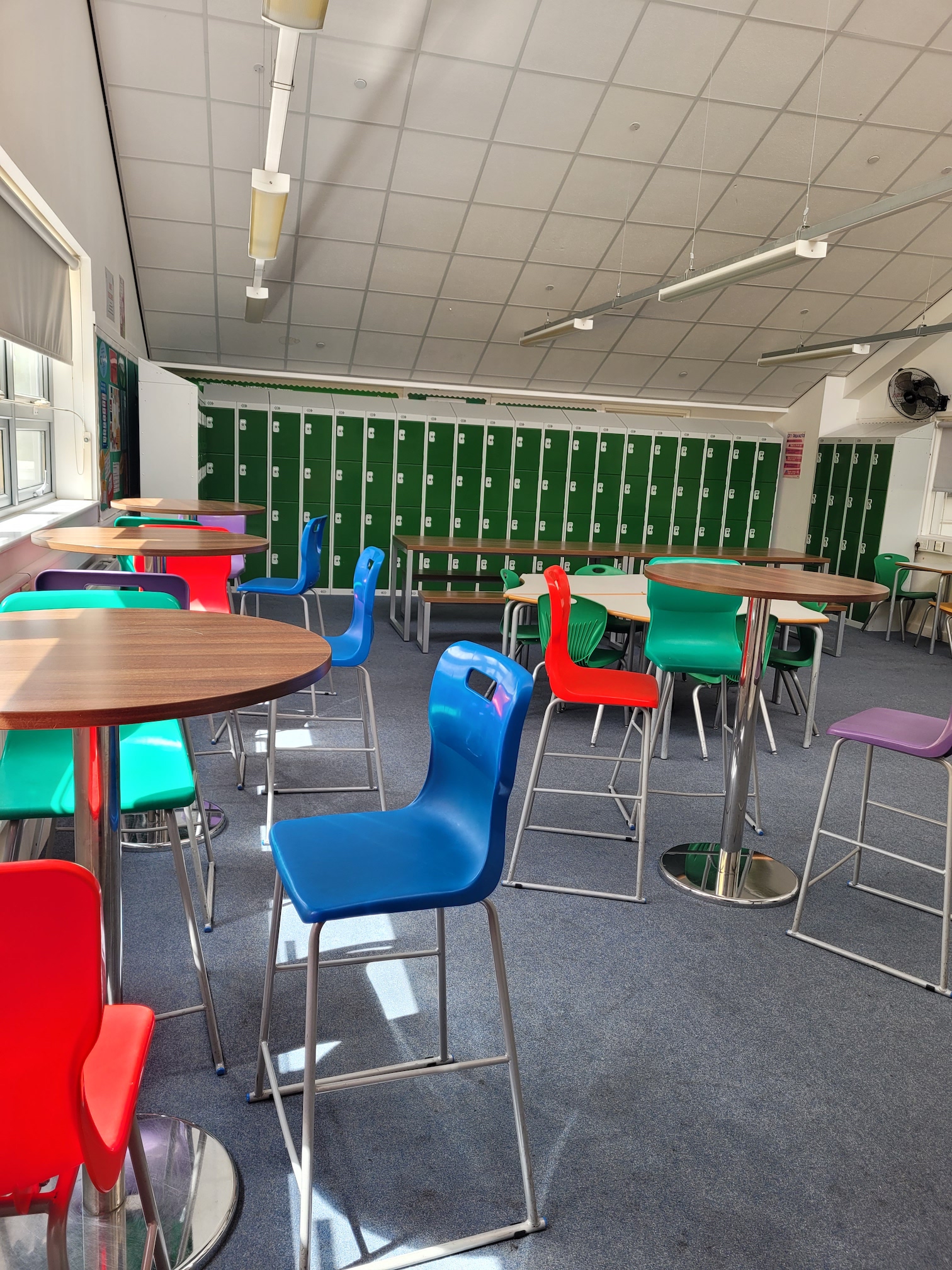
By providing emotional support, career advice, and academic mentoring, they empower students to overcome challenges and reach their full potential. They also play a crucial role in spotting issues early—whether related to mental health, learning needs, or personal circumstances—ensuring students get the help they need when they need it.
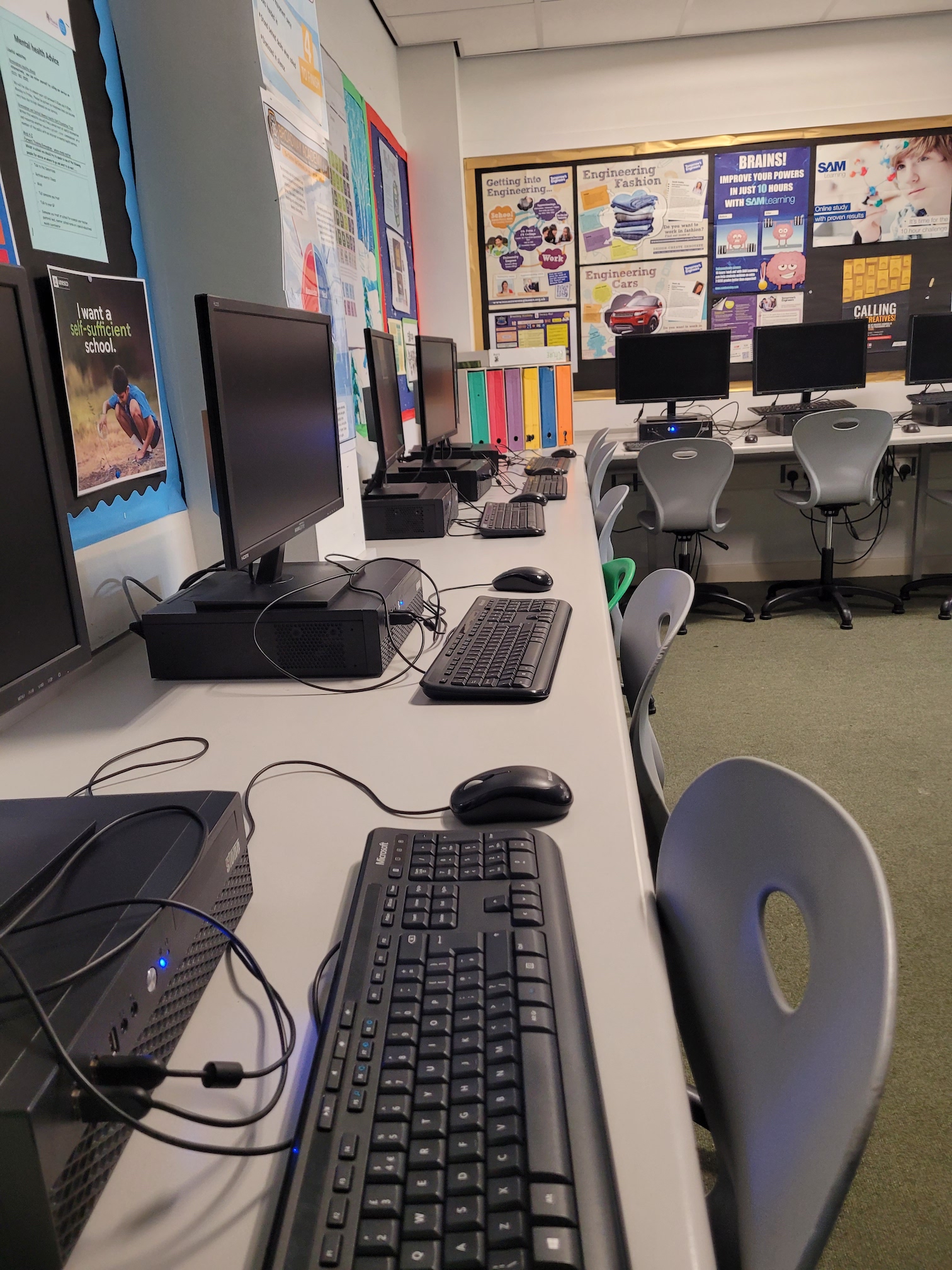
Their proactive approach helps create a safe, inclusive environment where every student feels seen, supported, and empowered. By addressing academic and personal challenges, they build resilience, confidence, and a sense of belonging. Student support staff are more than a helpful presence—they’re essential to fostering a culture of care, growth, and achievement in sixth forms.
Sports Centres of Excellence
Get ready for an unbeatable experience at Broadway Sixth Form Centre! If you’re passionate about sports and want to stay on top of your academic game, our Sports Centres of Excellence are exactly where you need to be.
Here, you won’t have to choose between your studies and your love for sports—you can have it all! While you’re pursuing your A Levels or BTEC Level 3 courses, you’ll also be sharpening your athletic skills with our exclusive wraparound support.
Don’t just study—excel in every way at Broadway Academy Sixth Form Centre. Your future starts here!
Got questions? Reach out to Mr. Arshad, Director of Sport, at stna@broadway-academy.co.uk or Ms. Godsil, Head of Sixth Form.

Judo Academy
We’re also offering the opportunity to join the renowned Erdington Judo Club, training at Broadway Academy—where you’ll get expert coaching and become part of a supportive team. Ready to roll with us? Let’s get started today.

Basketball Academy
We’ve partnered with the City of Birmingham Rockets to offer an exciting Basketball Sports Academy for 16–19-year-olds. Under the guidance of ex-England and GB coach Michael Gayle, students balance BTEC or A-level study with 12–15 hours each week of technical skills training, strength and conditioning, wellbeing mentoring, performance reviews, and competitive fixtures. This programme provides a clear pathway to excel on and off the court, developing talent, discipline, resilience, and opportunities for progression to higher levels of the game.


Football Academy
Hear our Match Reports Here.
Sixth Form Bursary
A Sixth Form Bursary is a financial support fund provided by the government to help students aged 16 to 19 stay in education or training after GCSEs—typically in sixth form or college.
What Can It Cover?
It can help with essential education-related costs, such as:
-
Travel to and from school or college
-
Meals during the day
-
Books, equipment, and course materials
-
Field trips or university visits
-
Uniform or work clothing
🎓 Who is eligible?
There are two types of bursaries:
1. Vulnerable Student Bursary (up to £1,200 a year)
You may get this if you are:
-
In care or a care leaver
-
Receiving Income Support or Universal Credit in your own name
-
Getting Disability Living Allowance (DLA) and Employment and Support Allowance (ESA)
-
Receiving Personal Independence Payment (PIP) and ESA or Universal Credit
2. Discretionary Bursary
Each school or college sets its own criteria, often based on:
-
Household income
-
Whether you qualify for free school meals
-
Personal circumstances (e.g. low-income family, single-parent household)
📌 Important Points:
-
The amount varies – there’s no set figure.
-
Payments may be dependent on attendance, behaviour, and progress.
-
Funds are limited — schools may prioritise students in most need.
📋 How to apply:
-
You apply directly through via our 6th form support team.
-
You’ll need to provide evidence of income or benefits.
Enrichment

What is Enrichment?
Enrichment is an essential and exciting part of student life at Sixth Form, offering a wide range of additional courses, activities, and opportunities that go beyond your core academic studies. It is designed to broaden your horizons, develop new skills, and prepare you for life beyond school—whether that’s university, an apprenticeship, or the world of work.
Our Enrichment programme includes options that lead to formal qualifications, such as the Extended Project Qualification (EPQ) or Core Maths, as well as a diverse selection of non-academic pathways. These might include sport, music, drama, volunteering, enterprise initiatives, debate clubs, or even Duke of Edinburgh.
Every student is encouraged—and expected—to participate in the Enrichment programme. It not only enhances your personal and social development but also helps you stand out when applying for universities, jobs, or apprenticeships.
We also offer a structured careers package that is fully aligned with the Enrichment programme. Through this, you will take part in workshops, one-to-one guidance, employer encounters, and work-related learning—all aimed at helping you make informed and ambitious decisions about your future.
In short, Enrichment is your chance to try something new, build confidence, gain experiences, and shape the person you want to become.

Enrichment Options
Do you want to stand out from the crowd?
Participating in our enrichment programme alongside your academic programme will help develop your skills, knowledge and experience giving you the edge when applying for further education courses or employment. Find out more about the opportunities in this guide.
- Personal & Skills Development – develop your professional and personal skills to improve your employability and application success.
- Additional Qualifications – add to your CV and give applications a boost with a new qualification.
- Academies & Schools – deepen your subject knowledge with an academy or school and link to an EPQ for an additional qualification.
- Performance – develop your musical and drama skills.
- Sport – join a sports team and play competitively.
- Societies & Social Development – meet students who share the same interests as you and take a lead in developing student experience.
Reasons commit to the Enrichment Programme
- Enrichment is compulsory in Broadway Sixth Form and seen as worthwhile. Here are just some of the reasons why you should do an enrichment:
- You can earn extra UCAS points for your university application
- You will have exciting things to write about in your Personal Statement for Higher Education, Apprenticeship or job applications
- You can learn a new skill
- You can show you have real commitment to a particular course or career, which will impress future employers or university admissions tutors
- You can improve your team-working and leadership skills, as well as your confidence
- You can make new friends with similar interests to you
- It will be fun

Areas covered under the Enrichment programme
| Personal and Skills Development | Additional Qualification | Widening Participation |
|
Volunteering in school Mentoring programme Year 7 Year 8 Reading Volunteers D Of E Gold Photography Social Action Enrichment Afternoon |
EPQ Sports Leaders
|
Aston Medical School Aspiring to the Professions (UoB) Sutton Trust Routes to the professions (UoB) MOOCs (UniFrog) UCAS Fairs
|
|
Sport
|
||
|
Basketball Football Judo |
Sixth Form Events
Student Resources
Get ready to stand out! At our 6th form, we shape students to be independent, self-disciplined, and dynamic, with a “can do” attitude that sets them apart. We believe in building character as well as achieving excellence—and it shows in everything we do. Here’s what drives us:
- Outstanding Pastoral Care: We support you every step of the way, making sure you always have the guidance you need.
- High Standards: From punctuality to attendance, we keep expectations high because we know you can reach them.
- Focused on Progress: We regularly track your development through assessments, helping you aim for your best results.
- Supportive Culture: We offer the perfect mix of support and challenge to help you grow.
- Clear Path to Success: With a vision for your achievement beyond KS5, we prepare you for life after school.
- Opportunities Everywhere: We make sure your growth extends beyond the classroom, helping you become well-rounded and ready for anything.
- Bridging Course: Empowering every student for a Bright Future at Our Sixth Form.
Join us, and discover what makes learning here truly special!
Start Prepping for University
Broadway Sixth Form offers strong academic pathways, expert guidance, enriching activities, inclusive support, and a proven record of university progression—making it the ideal choice for ambitious students ready to study, grow, and move on to higher education with confidence.
Outstanding Higher‑Education Progression
83 % of students progress to higher education or training, including 8 % to Russell Group universities—well above the national average.
Excellent Careers & Guidance Support
With the National Quality in Careers Gold Standard, Broadway offers tailored pathways planning and UCAS support to help students make informed choices.
Co‑curricular Opportunities Enhance Profiles
From Duke of Edinburgh and outdoor education to sports academies and theatre trips—students gain valuable, university‑recognised experiences.
Proven Success & Local Trust
Serving 1,300+ students and the Perry Barr community, Broadway is Ofsted-recognised and backed by careers experts as a trusted path to higher education.
Quick Links
school hours
M-F: 8:30am – 3:20pm
Address
The Broadway, Perry Barr, Birmingham. B20 3DP